Dead corner in your living room? A corner TV stand can transform that awkward angle into your viewing hub. Corners are prime real estate, often overlooked but perfect for fitting a TV and storage without eating up wall space where a sofa or sideboard might land. Whether you’re building from scratch, upgrading from a media console, or making the jump to wall-mounted viewing, the right corner TV stand does more than hold your set. It anchors the room, provides smart storage, and can tie your whole design together. Let’s walk through seven ideas, from floating minimalist designs to DIY projects that fit tight budgets.
Table of Contents
ToggleKey Takeaways
- Corner TV stand ideas range from floating minimalist designs to console units with storage, each transforming unused corner space into a functional viewing hub.
- Floating corner TV stands require secure wall-stud installation with fasteners rated for at least twice the combined weight of your TV and components to ensure safety.
- Console-style corner TV stands offer dual benefits of hidden storage for cables and equipment plus proper ventilation to prevent overheating of set-top boxes and receivers.
- Electric fireplace corner TV stands add both ambiance and warmth without venting requirements, though positioning and heat output should be considered in smaller rooms.
- DIY corner TV stand projects using budget materials like pine shelves, plywood, and steel brackets let homeowners customize the design while cutting costs significantly.
- Swivel and rotating corner TV stands provide flexibility for open-plan living but require careful cable management to prevent HDMI and coax wear from repeated bending.
Floating Corner TV Stands: Sleek and Space-Saving
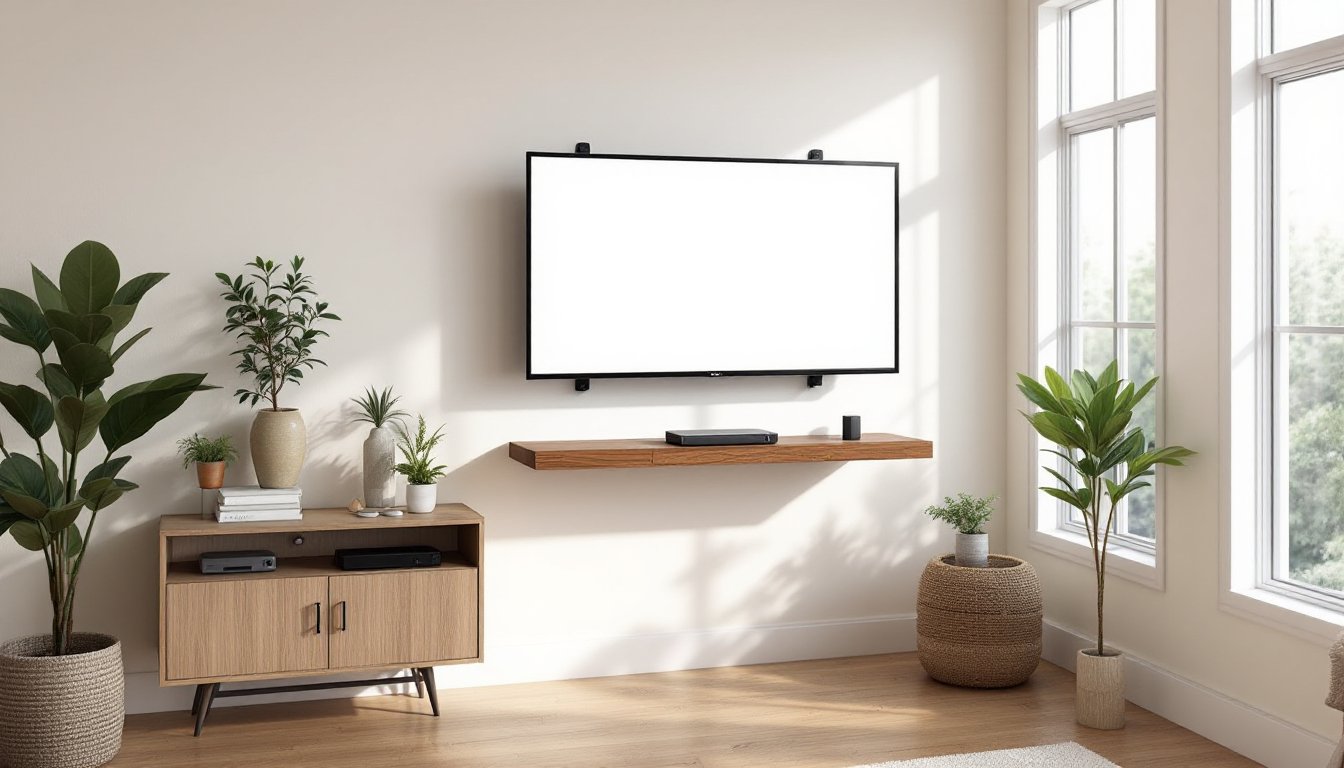
A floating corner TV stand mounts directly to the wall studs, creating a clean look with zero footprint on the floor. This style works best in rooms with good wall space between studs, typically 16 inches on center. Your TV sits at eye level when seated, and the open floor underneath makes the room feel larger and easier to clean.
Floating stands require proper installation. You’ll need to locate studs with a stud finder, then use lag bolts or heavy-duty anchors rated for at least twice the combined weight of your TV and any components. A typical 55-inch TV weighs 40–60 pounds, so plan for at least 150 pounds of support. If you’re unsure about wall strength or stud placement, bring in a handyperson: a failed installation is dangerous and costly.
For materials, consider metal brackets with a wood or metal shelf, or look for purpose-built floating TV mounts. Steel brackets paired with hardwood can handle a TV and a soundbar beautifully. Angle your monitor slightly downward to reduce neck strain during extended viewing.
Console-Style Corner TV Stands with Storage
Console-style stands sit on the floor and offer generous storage underneath, ideal if you have cables, streaming boxes, or gaming equipment to hide. Look for units with closed cabinets and open shelving combined, so you get both concealed storage and a display area for plants or decor. Wood and metal hybrids work well for living rooms aiming for modern or industrial vibes.
When shopping or building, measure your corner’s exact dimensions. Most living room corners offer 28 to 36 inches of depth, and console stands typically run 40 to 60 inches wide. A console at 30 inches tall keeps your TV at a comfortable viewing height without your neck craning upward. Check the weight capacity, solid wood consoles easily handle a 65-inch TV, but lighter particle-board units may struggle beyond 50 pounds of equipment.
The real win with consoles? Thermal management. Set-top boxes and receivers need airflow: console shelving keeps them from overheating. Drill or cut ventilation holes in rear panels if you’re building one yourself.
Open Shelving Corner Units for Contemporary Décor
Open shelving works for the minimalist or design-forward homeowner. Floating shelves or metal-framed corner units show off your TV, gear, and decorative items without visual weight. These designs pair well with concrete, exposed brick, or modern paint colors. The downside: dust settles on exposed shelves, and cables become part of the aesthetic.
If you go open shelving, invest in cable management tools, sleeves, clips, and channels that hide wires running down the wall or across shelves. A power strip rated for 15 amps tucked behind the bottom shelf keeps all your electronics plugged in and organized. Mount shelves at least 16 inches on center into studs for a TV: single-stud floating shelves max out around 50 pounds safely.
Design tip: Break up empty shelf space with small planters, art books, or sculptural pieces. A living room with an open-shelf TV stand reads as intentional, not unfinished, but only if the shelves themselves tell a story rather than sitting bare.
Corner TV Stands with Built-In Fireplaces
A corner TV stand with an integrated electric fireplace adds warmth, literal and psychological, to your living space. Electric fireplaces are safe for renters and homeowners alike, don’t require venting, and are available in sizes ranging from compact 20-inch units to dramatic floor-to-ceiling designs. They plug into a standard 120V outlet, so no hardwiring needed.
Most built-in fireplace TV stands position the TV above the unit, creating a focal point that draws eyes upward. Stack the TV higher than you normally would, this angle works because the fireplace glow naturally draws the eye down slightly. Expect to spend $300 to $1,200 depending on fireplace quality and stand materials: prices fluctuate based on region and seasonal demand.
One practical note: electric fireplaces output real heat (typically 750–1500 watts). In smaller rooms, position the unit away from curtains or upholstered furniture, and keep the area in front clear. If your living room already runs warm, the flame-only setting gives ambiance without extra climate load.
Rotating and Swivel Corner TV Stands
A rotating or swivel corner stand lets you angle your TV toward different seating zones, perfect for open-plan living or if you want to pivot the TV between a corner view and a more central position. Motorized options rotate at the press of a remote, while manual swivel bases turn with hand pressure. Cost ranges widely: manual bases run $50–$150, motorized versions $300 to $800.
Before buying, check your TV’s weight and the stand’s capacity, most quality swivels handle 45–75 pounds, which covers most common screen sizes. Mount height matters here too: if you’re swiveling, align the TV’s center with your sitting eye level across all rotation angles. A stand that’s too high or low creates discomfort as you pivot.
Cabling gets trickier with swivel stands. Run power and signal cables through the stand’s central post if the design allows, or use flexible sleeves that loop with the rotation. Avoid kinking HDMI or coax cables: they wear out faster when bent repeatedly. Test the swivel range before installation to make sure your cables have enough slack.
DIY Corner TV Stand Projects for Budget-Conscious Homeowners
Building a corner TV stand from scratch cuts costs significantly and lets you customize to your exact space. A basic stacked wood shelf design works well: buy two or three pine or plywood shelves (¾-inch thick minimum, cut to 36–48 inches wide), mount them into wall studs using lag bolts spaced 16 inches apart, and add a lower base unit for equipment if desired.
For a more polished look, model home living rooms often use steel-frame designs paired with wood tops. You can order metal corner brackets online, $40–$100 per set, then bolt them to wall studs and attach your shelves. This approach gives you the industrial-modern look at a fraction of the cost of commercial units.
Safety first: use a stud finder to locate framing, and always check that your fasteners are rated for the combined weight of your TV and any gear. Dry-wall anchors alone won’t support a TV: you need studs. HGTV and design blogs often feature step-by-step builds if you need visual guidance. For a totally budget-friendly option, tiny home living rooms showcase clever stands built from reclaimed wood and simple brackets, proof that you don’t need high-end finishes to create a functional, attractive setup.
Conclusion
Choosing the right corner TV stand means matching your lifestyle, space, and budget. Floating stands maximize floor space: consoles offer hidden storage: open shelving brings a designer edge: built-in fireplaces add warmth: swivel designs offer flexibility: and DIY projects let you build exactly what you need. Measure your corner carefully, think about what sits under and around your TV, and don’t skip on installation safety. Your corner TV stand isn’t just furniture, it’s the anchor that ties your entire living room together.