A corner play area transforms unused square footage into a functional, supervised space where kids stay engaged while parents relax nearby. Unlike a full playroom, a corner setup fits seamlessly into your existing living room without sacrificing seating, entertainment, or the flow of daily life. Whether you’re working with a cozy apartment or a sprawling family home, carving out a dedicated play zone in an underutilized corner maximizes your living space and keeps toys organized in one contained area. This guide walks through planning, furniture selection, safety measures, and design tricks that make a corner play area feel intentional rather than like a toy explosion that swallowed your living room.
Table of Contents
ToggleKey Takeaways
- A corner small play area in your living room maximizes unused space and keeps toys organized without dedicating an entire room, while maintaining supervision and functional daily living.
- Select a corner visible from main seating, away from traffic paths, and ideally near a window for natural light and a less confined feeling.
- Invest in multi-functional storage solutions like adjustable shelving, storage ottomans, and modular cube organizers that adapt as your children grow.
- Secure heavy furniture to wall studs with L-brackets or toggle bolts, use non-slip rug pads, and install tamper-resistant outlet covers to ensure child safety.
- Create visual separation using an area rug, soft accent colors, strategic lighting, and low storage units that maintain sight lines for supervision.
- Start with essential elements (rug, storage unit, soft seating) and scale gradually with modular pieces that transition easily as your family’s needs evolve.
Why a Corner Play Area Works in Modern Living Rooms
A corner play area solves one of the biggest challenges in modern homes: how to accommodate kids without dedicating an entire room to toys. Most living rooms have at least one awkward corner, the spot behind a door, the alcove beside a window, or the nook between two walls, that doesn’t work for traditional furniture but’s perfect for corralling play.
Having a designated play zone keeps the rest of your living room functional. Kids know where their stuff lives, you can close it off when guests arrive, and the rest of your seating stays game-night ready. It also makes cleanup faster and gives children a sense of ownership over their space. From a design standpoint, a well-planned corner area looks intentional and curated, not like an afterthought or a toy landslide.
Modern living rooms increasingly blur the lines between adult and child spaces. A thoughtful corner play area respects that blend by using grown-up-friendly colors, furniture that matches your décor, and storage that doesn’t scream “this is for kids.” When designed right, it becomes part of your room’s layout rather than a garish addition.
Choosing the Right Corner and Assessing Your Space
Not every corner works equally. The ideal spot is visible from your main seating (so you can supervise), away from high-traffic pathways, and naturally defined by two walls. A corner near a window gets natural light and feels less confined. Avoid corners directly in sight lines between the main living area and bedrooms, you want separation without isolation.
Before you buy anything, spend a day observing how your family uses the living room. Do kids need to sprawl out, or do they mostly play with smaller toys? Is the room quiet during the day, or do you need sound absorption? Are there heat vents, baseboards, or architectural quirks that affect furniture placement? These observations shape every decision that follows.
Measure the floor area available, ceiling height (important if you’re adding shelves), and lighting conditions. A dark corner needs task lighting: a sun-drenched corner might require a rug or furniture that won’t fade. Check for outlets, a small lamp or a white-noise machine adds value. Also note the wall finish: if you’re painting an accent wall or adding peel-and-stick wallpaper, now’s the time to plan that.
Measuring and Planning Your Layout
Start with a floor plan. Sketch your corner on graph paper or use a free app like Floorplanner. Mark the dimensions of each wall and note any fixed elements (baseboards, outlets, vents, window trim). Most play areas range from 48 to 120 square feet, roughly a 6-by-8 to 10-by-12 rectangle tucked into the corner.
Decide on your boundary. A simple area rug creates a visual boundary without blocking sight lines. A low shelf or storage unit along one edge signals “this is the play zone” while keeping the space open. Some families use a tension rod with fabric panels to create a soft wall, but this works best in corners where it won’t block your view of kids.
Measure twice before ordering furniture. If you’re planning an L-shaped bench or a storage unit that spans both walls, verify actual dimensions (not just what looks right in the photo). Account for trim, baseboards, and the thickness of the furniture itself. A shelf that’s 1 inch too wide will be 1 inch too wrong.
Essential Furniture and Storage Solutions
The heart of a functional play area is storage that actually works. Open shelving (adjustable depth, 12 to 36 inches tall) lets kids grab what they want and see what’s available, reducing the “I don’t know what to play with” complaint. Closed storage (bins, cabinets, drawers) keeps clutter contained and makes cleanup faster.
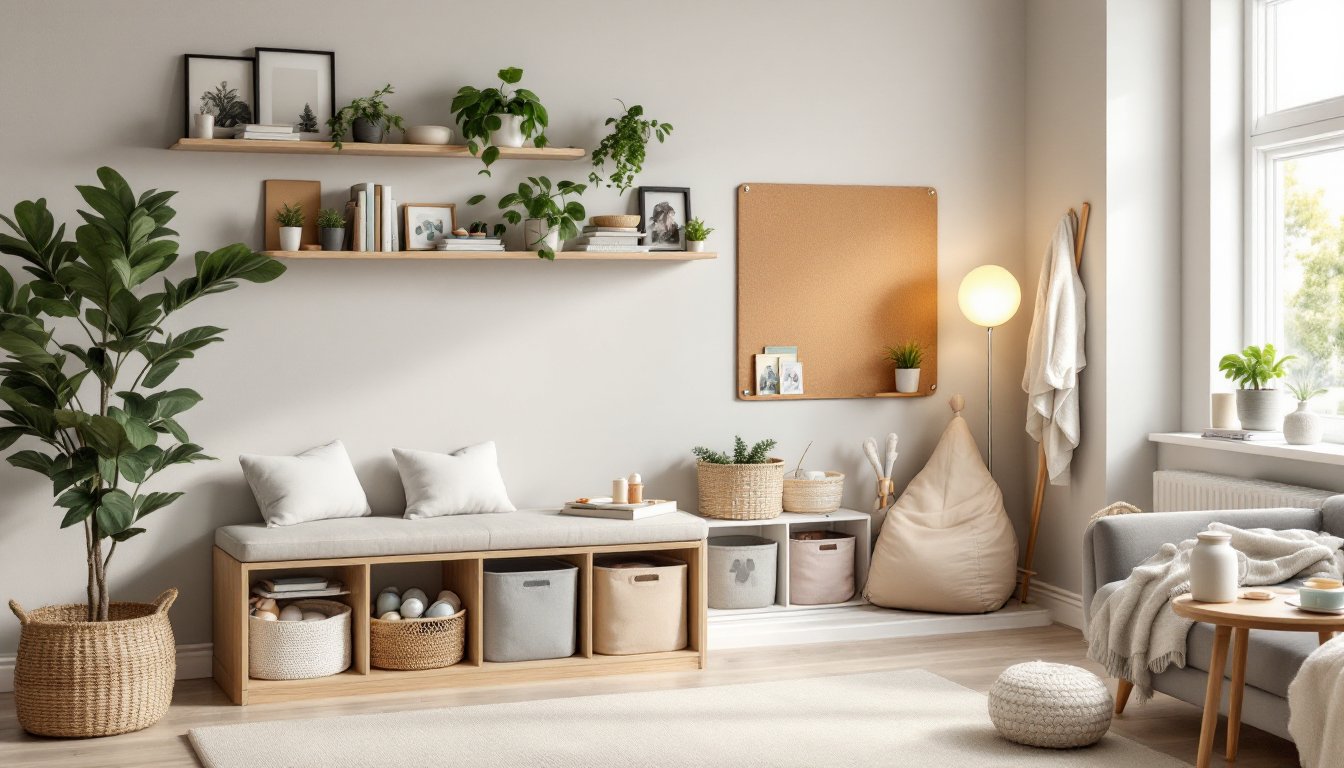
Target a mix: open shelves for rotating toys and activities, closed bins for smaller pieces that disappear, and a low bench or cushioned seating that doubles as toy storage. A simple wooden cube organizer (like the IKEA Kallax in a 4×4 configuration) costs $80–$150 and fits snugly in most corners. Drape fabric bins in each square to soften the look and corral smaller items. Alternatively, look at modular systems designed specifically for tight spaces: these often cost more upfront but adapt as your kids grow.
If your corner is shallow (less than 5 feet deep), a single low shelf along one wall plus a small seating cube covers your needs. If you have 6+ feet, you can create an L-shaped arrangement with shelving on two walls, a padded bench in the corner, and open floor in the middle for active play.
Multi-Functional Pieces That Maximize Efficiency
Double-duty furniture is key in smaller spaces. A storage ottoman serves as seating, a side table, and a toy box. A floor cushion with a zippered cover (removable, washable) provides seating and storage. A low bookshelf can hold picture books facing outward, boxed games on its shelves, and bins for toys on top.
Consider a reading nook component: a small beanbag, a narrow bookshelf, and a clip-on lamp transform your play area into a cozy spot where older kids can settle with a story. This gives the space a purpose beyond toddler toys and helps it age with your kids.
Don’t overlook wall space. Wall-mounted shelves (securely anchored to studs, rated for the weight you’re loading) save floor area and create visual interest. Pegboards let kids organize their own supplies, hanging bins, hooks, and baskets teach autonomy and keep things tidy. A cork or whiteboard wall invites creativity (and contains it to one spot) without producing paper clutter.
Safety Considerations and Flooring Options
Flooring anchors the entire play area. Wall-to-wall carpeting offers comfort and sound dampening but traps crumbs and holds allergens. A high-quality area rug (at least 5×7 feet, outdoor-grade if possible) defines the space, provides cushioning, and washes more easily than carpet. Place a non-slip rug pad underneath to prevent tripping hazards.
If your living room has hard floors (wood, tile, laminate), layering a rug with interlocking foam tiles (½-inch to 1-inch thick) beneath it adds safety for falls and isolates noise. These tiles run $15–$30 per tile and install without adhesive, so you can adjust layout later.
Anchoring heavy furniture to the wall is non-negotiable. Tall shelves, cabinets, or storage units tip over easily when kids climb. Use L-brackets or wall anchors rated for the weight, and secure them to studs when possible. For drywall-only mounting, use heavy-duty toggle bolts.
Keep electrical outlets out of reach or install tamper-resistant outlet covers (standard in updated homes, retrofittable otherwise). If you’re adding a lamp for task lighting, keep cords taut and out of traffic paths. Check that any paint you use is low-VOC or zero-VOC: kids in enclosed spaces breathe the air, and paint fumes linger in small spaces.
Choose toys and furniture free from recalled items. Check the Consumer Product Safety Commission website regularly. Avoid cords, small parts, and pinch points at a child’s eye level. Soft, rounded edges on furniture trump sharp corners, a corner protector kit (soft rubber caps for $10–$20) retrofits existing pieces.
Wear safety glasses and gloves when assembling furniture or securing anchors. If you’re drilling into walls, wear a dust mask and use a stud finder to avoid pipes and electrical wires.
Creating Visual Separation Without Walls
The best corner play areas feel intentional without physically closing off the living room. A simple area rug is the cheapest visual boundary: it signals “this is the play zone” without blocking your line of sight to supervise. Choose a rug in a neutral tone or subtle pattern that complements your living room rather than screaming “kids’ corner.”
Color works subtly. Paint the corner walls a soft, different shade (a pale blue, warm gray, or muted sage) while keeping the rest of the room consistent. This costs under $50 in materials and transforms how the corner reads without building a wall. Use an eggshell or satin finish for easier cleanup of inevitable crayon marks or sticky fingerprints.
Lighting creates separation too. A dimmer-enabled floor lamp or a pendant hung from the ceiling above the corner draws focus and gives the area its own ambiance. Warm-white bulbs (2700K) feel cozier than cool white and reduce the institutional vibe of standard overhead lights.
Open shelving or a low storage unit along the edge (not completely blocking the view) naturally delineates the space. Unlike a full wall, this allows sightlines while making the boundary clear. Fabric bins and organized shelves read as more cohesive than scattered toys. Pairing storage solutions with a coordinated color scheme ties the corner to your living room’s palette and makes it look intentional.
For families wanting slightly more separation, a tension rod with lightweight linen curtains creates a soft boundary that feels grown-up and can close off the area when entertaining. This works in L-shaped corners where you can run the rod along one wall without blocking traffic. The curtain fabric should match or complement your living room textiles, throw pillows, rug, or upholstery.
Consider adding a statement piece that bridges both zones. A wall-mounted gallery of simple, framed prints at adult eye level (above the toy zone) reminds visitors this is primarily a living space. Similarly, indoor plants placed on higher shelves soften the corner and add life without taking up floor space or becoming a hazard.
Sound control matters more than visual barriers. A soft rug, curtains, and upholstered furniture absorb play noise and prevent the corner from feeling chaotic. If noise carries, acoustic panels in neutral colors mount on walls without looking industrial. These run $30–$100 per panel and genuinely reduce sound transmission.
Bringing It All Together
A corner play area is achievable in almost any living room with modest investment and thoughtful planning. The key is choosing the right corner, investing in storage that earns its place, prioritizing safety, and designing boundaries that feel natural rather than fortress-like. Your living room should serve the whole family, kids included, without sacrificing function or style.
Start small. A simple rug, a storage unit, and some soft seating might be all you need. As your kids grow and their interests shift, modular pieces (shelving, bins, cushions) adapt without a full redesign. The goal is a space that’s kid-friendly now and transitions easily into something else later, because nothing lasts forever in a house with growing kids. Build smart, stay flexible, and you’ll create a corner that works as hard as you do.