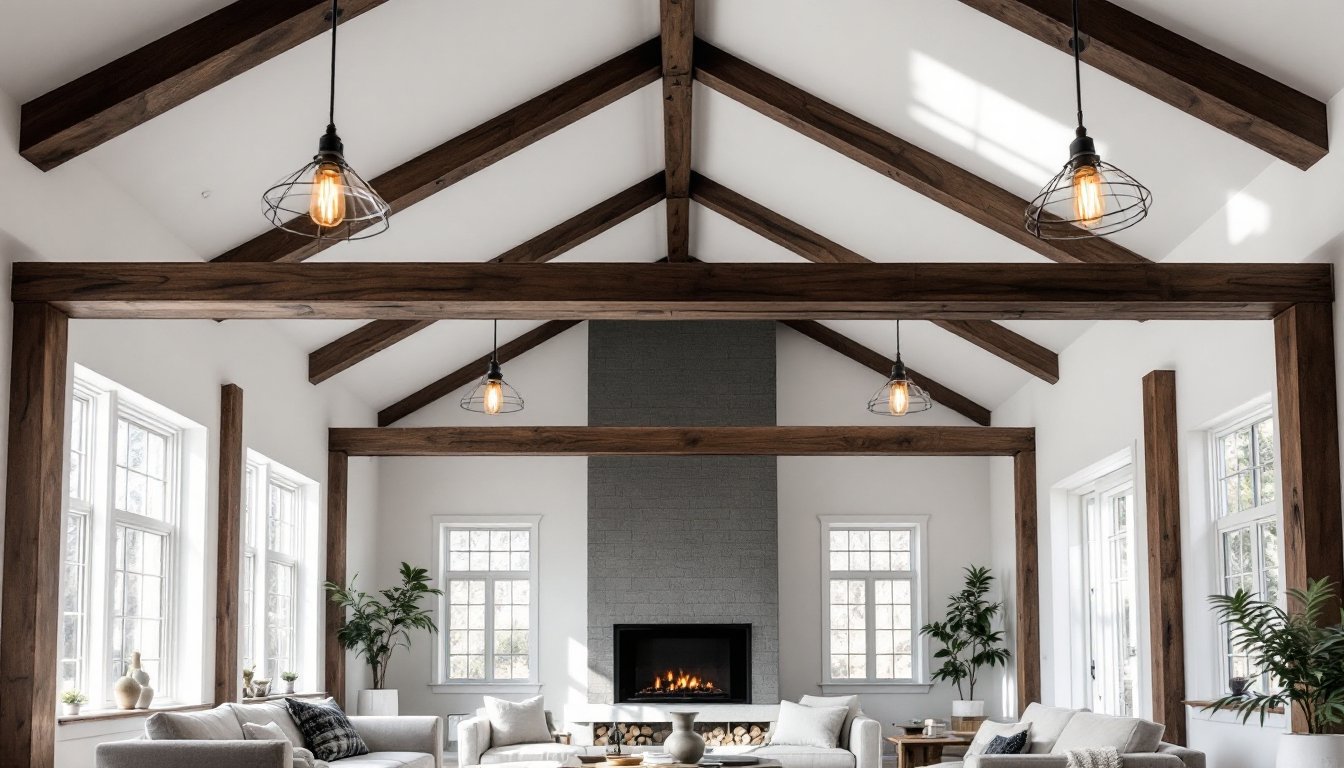
Ceiling beams aren’t just structural, they’re a design statement that can completely reshape how a living room feels. Whether you’re drawn to the warmth of reclaimed wood, the sleek minimalism of industrial metal, or the drama of lighting-integrated designs, beams offer both aesthetic impact and architectural character. This guide walks through practical ceiling beam ideas that work across styles, from rustic farmhouse to contemporary loft. You’ll find real-world considerations about installation, costs, and which approaches suit your space and skill level.
Table of Contents
ToggleKey Takeaways
- Ceiling beam ideas range from authentic reclaimed wood ($1,500–$4,000 per linear foot) to budget-friendly faux beams ($100–$400 per section), allowing you to choose based on budget and authenticity preferences.
- Painted finishes like white or gray create modern, airy spaces, while stained or weathered finishes add texture and suit rustic or traditional designs.
- Industrial metal beams and mixed-material designs (steel-wood or concrete hybrids) offer visual impact but require professional structural engineering and installation.
- LED lighting integrated into beams transforms them into functional design elements, with warm white (2700K) strips costing just $20–$60 for 16 feet.
- Ceiling height and spacing significantly affect beam aesthetics; aim for 10+ feet ceiling height and space beams 4–6 feet apart to avoid a cramped feel.
- Always hire a structural engineer ($300–$800) for real load-bearing beams to verify structural integrity and prevent sagging or safety issues.
Exposed Wooden Beams for Rustic and Modern Appeal
Wood beams are the classic choice for adding warmth and depth to a living room. Real exposed beams work beautifully in both rustic and contemporary settings, the key is finish and placement.
Reclaimed Wood Beams
Reclaimed beams carry history. Salvaged from old barns, mills, or warehouses, they arrive with nail holes, weathering, and color variation that new wood can’t replicate. A 10″ × 10″ hand-hewn timber beam typically runs $1,500–$4,000 per linear foot, depending on wood species (chestnut, hickory, and oak command premium prices). Reclaimed beams work especially well in log home living rooms where authenticity matters.
Before purchasing, check the beam’s structural integrity, look for deep cracks, rot, or excessive powder that suggests decay. Also note actual dimensions: a reclaimed 8 × 8 may measure 7.5″ × 7.5″ once cleaned and milled, so verify before designing. Installation requires solid support posts or beam pockets in the load-bearing walls. This is structural work, hire a licensed contractor or structural engineer to confirm load capacity and proper fastening. Spans longer than 10 feet may need additional support mid-span to prevent sag over time.
Faux Beam Alternatives
Faux beams look convincing and cost significantly less, $100–$400 per 8-foot section versus $1,200+ for real wood. Made from polyurethane or lightweight concrete composites, they’re hollow and surprisingly durable. Brands like HGTV-featured builders frequently use lightweight faux beams in renovation projects because they install faster and don’t require reinforced framing.
The advantage: no structural upgrade needed. A faux beam can glue or screw directly to an existing ceiling. Stain and finish them to match your decor, they take stain, paint, and weathering techniques identically to solid wood. The trade-off: they’re purely cosmetic. In high-traffic areas or open lofts, the hollow sound if tapped reveals their nature. For living rooms where appearance is the goal, they’re excellent value.
Painted and Stained Beam Finishes
Finish transforms beams from heavy anchors into intentional design moves. White or light gray painted beams feel airy and modern: dark stains emphasize texture and suit traditional interiors.
Painted beams work best when ceilings are vaulted or high (at least 9 feet). A crisp white beam against a white ceiling optically lifts the room. If painting new wood, sand with 120-grit sandpaper, fill nail holes with wood filler, then apply a primer (Benjamin Moore Advance or Kilz Complete Cover both block tannin bleed). Two coats of quality semi-gloss or satin finish paint ensure durability: use a nap roller (3/8″) for smooth finish on beams. Expect 200–400 sq. ft. coverage per gallon, one gallon covers roughly 3–4 large beams depending on thickness.
Stained beams showcase grain and wood character. A mid-tone walnut or oak stain pairs well with modern home living rooms featuring neutral walls. Apply stain with a brush or cloth, following the grain direction, and wipe excess after 5–10 minutes. Multiple coats deepen color: gel stains reduce drips on vertical surfaces. Finish with polyurethane (matte or satin) for protection and an even sheen.
Weathered gray stains (popular in farmhouse and coastal styles) age beams instantly. Dry-brush technique, load stain onto a brush, then drag it sparsely across the wood, creates an aged, lived-in look without overdoing it. This finish hides surface imperfections and suits rustic beams especially well.
Industrial Metal and Mixed-Material Ceiling Beams
Steel and iron beams evoke warehouse lofts and industrial-modern design. Exposed steel I-beams or box beams add raw, unfinished character while maintaining structural honesty, they actually support load rather than just appearing to.
Real steel beams cost $1,000–$3,000+ for a single span, plus professional installation ($500–$1,500 per beam). They require proper support calculations and bolting into structure: this isn’t a DIY fastener job. Steel must be sealed or painted to resist rust in humid environments. A high-build epoxy primer followed by industrial enamel protects against oxidation. Black steel is the standard industrial look, but matte gray or bronze oxide finishes suit contemporary spaces well.
Mixed-material beams, steel frames with wood panels, or concrete-steel hybrids, offer visual interest while reducing weight. A timber beam encased in a steel U-channel combines wood’s warmth with metal’s structure. Concrete beams with embedded steel reinforce add sculptural presence. These approach requires custom fabrication and professional structural design, so budget accordingly and expect a 6–12 week lead time.
For budget-conscious DIYers wanting the industrial look, black-painted wood beams mimicking steel profiles work surprisingly well. Pair them with decorating ideas for mobile home living rooms or compact spaces where visual weight matters. The aesthetic reads industrial without the structural cost.
Decorative Ceiling Beams with Built-In Lighting
Integrated lighting transforms beams into functional design elements. LED strip lights, pendant fixtures, and cove lighting recessed into or around beams add ambiance and task lighting.
LED strips are the easiest retrofit. Warm white (2700K) LEDs feel cozy: cool white (4000K) suit modern spaces. Adhesive-backed strips mount to the bottom of a faux beam or into a routed groove on solid wood. Run wires through the ceiling to a dimmer switch or smart controller. Flex LED strips cost $20–$60 for 16 feet: a dimmer switch adds $30–$80. This is electrical work, if you’re not confident, hire a licensed electrician to run the switch. Most residential circuits handle low-voltage LED loads easily, but local electrical code (NEC Article 410) governs fixture spacing and wiring.
Pendants hanging from beams create visual interest and direct light downward for reading areas. Stagger fixtures at 4–6 foot intervals: 18–24 inches below the beam maintains proportion. Edison-style or industrial-looking fixtures echo the architectural statement beams already make.
Cove lighting (strips recessed into a soffit above the beam) casts indirect, ambient light and is popular in luxury living room design. This requires framing a soffit around the beam, minor carpentry if the beam is new construction, more involved if retrofitting. Hire an electrician for any wiring: ensure fixture selection matches room voltage (typically 120V for residential).
Installation Tips and Design Considerations
Before buying beams, measure twice. Ceiling height, span distance, and joist orientation dictate what’s structurally possible and aesthetically appropriate. Living rooms with 8-foot ceilings feel cramped with exposed beams: 10 feet is comfortable, 12+ opens design possibilities.
Structural vs. Decorative Beams: Real beams carry load: faux and painted wood beams are cosmetic. Know the difference upfront. If you’re covering existing ceiling joists with beams for appearance only, they need only adequate fastening (lag bolts or beam hangers, typically every 16–24 inches). If you’re exposing structural members or adding real beams, hire a structural engineer ($300–$800) to verify existing framing and load paths. Live load, dead load, and beam deflection are non-negotiable calculations, guessing causes sagging ceilings or worse.
Spacing and Proportions: Beams spaced 4–6 feet apart create rhythm without overwhelming the room. A single dramatic beam down the center works in modern spaces. Multiple parallel beams suit traditional and rustic designs. Beam depth (thickness) should scale to ceiling height, a 12″ deep beam suits 12-foot ceilings: a 6″ beam looks proportional in 9-foot rooms.
Finishing Touches: Beams aren’t an afterthought, they anchor the entire room. Paint walls a neutral backdrop if beams are dark, or bold accent color if beams are light or stained. Gallery walls and artwork on neighboring walls compete visually, so keep wall art minimal or move it opposite the primary beam view. Furniture arrangement should respect beam lines, aligning a sofa parallel to beams, rather than perpendicular, feels intentional.
Interior design platforms like Homify showcase real ceiling beam projects across climates and styles, offering visual reference before committing to a design direction. Browse similar living room sizes and beam styles to see finishes and proportions in actual homes.