A blanket basket does more than corral throws and blankets, it anchors the living room with texture, warmth, and intentional style. Whether you’re working with a Scandinavian minimalist vibe or a cozy farmhouse aesthetic, the right basket becomes a functional sculpture that ties the room together. This guide walks through material choices, placement strategies, and DIY options so you can pick a solution that fits your space and budget. Let’s find the blanket basket idea that transforms your living room from ordinary to inviting.
Table of Contents
ToggleKey Takeaways
- A blanket basket for your living room serves dual purposes: organizing throws and blankets while adding texture, warmth, and intentional style to your décor.
- Natural woven materials like jute, seagrass, and rattan work best for most design schemes and cost between $40–$120, while tighter weaves ensure durability and shape retention.
- Strategic placement beside a sofa or in a corner near plants and side tables creates a styled focal point; avoid doorways and ensure 12–18 inches of clear walking space around the basket.
- Fold blankets in thirds or quarters with edges facing outward, and mix textures like chunky knits and faux fur to create an intentional, luxe appearance.
- DIY blanket basket projects using wire frames wrapped in rope or wooden crates lined with fabric cost just $20–$40 and can be completed in under an hour.
- Choose baskets proportionate to your room size—larger baskets (22–26 inches) suit high-ceilinged spaces, while smaller ones prevent visual overwhelm in modest rooms.
Why Add a Blanket Basket to Your Living Room
A blanket basket serves a simple but crucial purpose: it keeps throws accessible without piling them on the sofa arm or tossing them over the back of a chair. Beyond function, it softens the room. Hard lines and rigid furniture can feel sterile, but a woven or textured basket adds warmth and visual interest at floor level.
It also solves a common problem. Most living rooms don’t have dedicated closet storage for seasonal bedding or extra throws. Rather than letting them disappear upstairs or get stuffed in a bedroom closet, a basket keeps them on display and within reach for movie nights or when guests need extra layers. This dual role, storage plus décor, is why interior designers and DIY homeowners alike reach for blanket baskets as a quick style win.
Another benefit: a basket signals intentionality. It shows that the room’s arrangement isn’t accidental. The difference between a blanket draped messily over furniture and one neatly folded in a styled basket is the difference between “I’m moving in” and “This is home.”
Best Materials and Styles for Your Space
Natural Woven Options
Woven baskets in jute, seagrass, rattan, or water hyacinth remain the most versatile choice. They work in nearly any design scheme, rustic, coastal, transitional, or modern. These materials breathe, so they won’t trap moisture around stored blankets. Natural baskets also develop a patina over time, adding character without looking worn out.
When shopping for woven options, check the weave density. A tighter weave holds its shape better and wears longer. Look for baskets with reinforced handles if they’ll hold multiple blankets: the weight adds up fast. Most well-made natural baskets in standard 18–24 inch diameters run $40–$120, depending on material quality and artisan craftsmanship. Seagrass tends toward the higher end: jute typically costs less but may fray at edges over time.
Modern and Contemporary Designs
If your living room leans industrial or contemporary, consider wire baskets, metal-frame designs with canvas inserts, or curated wooden options with clean lines. Metal baskets in black, brass, or natural steel pair well with minimalist furniture. Canvas-lined wire baskets add softness without the visual weight of heavy woven materials.
Wood baskets, think reclaimed barn wood or stained softwood slat designs, work when coordinated with other wood tones in the room. Avoid matchy-matchy: a basket in a slightly different stain than your coffee table or shelving creates visual interest. Concrete or resin baskets are also emerging options for ultra-modern spaces, though they’re heavier and not ideal for moving around frequently.
For a styled look that references interior design trends, sites like Real Simple showcase 15 chic blanket basket ideas suitable for different aesthetic preferences.
Strategic Placement and Arrangement Tips
Location matters. The most common placement is beside a sofa, on the floor, at a slight angle if the space allows. This keeps blankets within arm’s reach without blocking sight lines. In an open-concept living room, a blanket basket can mark the boundary between the living area and entryway or dining space, functional zoning without a wall.
Consider traffic flow. Don’t place the basket in a doorway or walkway where someone might trip over it or stub their toe. Leave at least 12–18 inches of clear walking space around it. If your living room is tight, a tall, narrow basket uses vertical space efficiently: shorter, wider baskets work better in sprawling rooms where you want visual weight at floor level.
Pairing a basket with other décor elements anchors the arrangement. Position it near a side table and floor lamp, or beside a console. A basket in the corner, especially if paired with a potted plant or indoor plants for living room décor, creates a cozy nook. Avoid the dead center of the room unless it’s intentionally styled as a feature, a basket alone in the middle of an empty floor looks lost, not curated.
Styling Your Blanket Basket for Maximum Impact
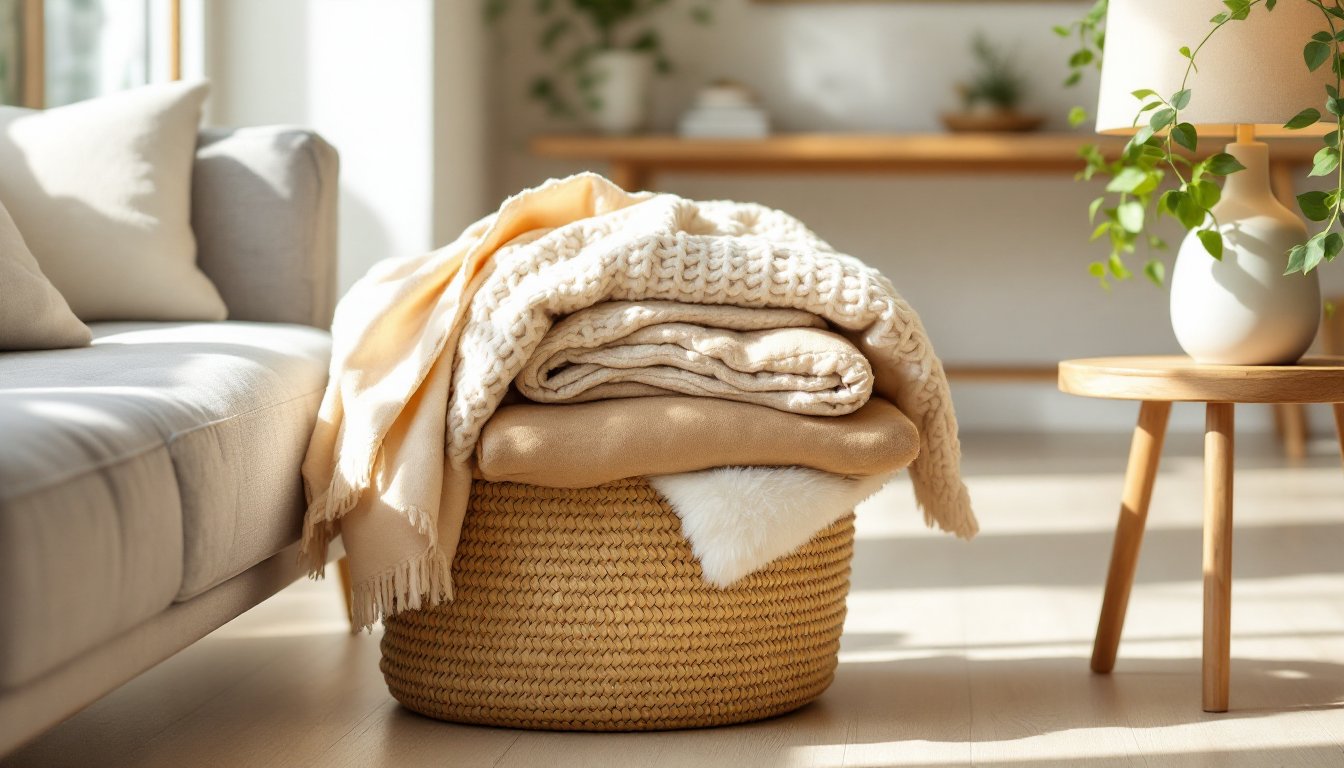
The contents matter as much as the basket itself. Fold blankets neatly, thirds or quarters depending on size, and stack them so the folded edges face outward. This creates a tidy appearance and makes it easy to grab one without unraveling the pile. Mix textures: a chunky knit throw, a lightweight linen blanket, a faux fur accent piece. Variety reads as intentional and luxe.
Color coordination ties the basket to the room’s palette. A neutral jute basket pairs with any color scheme, but you can also choose baskets in complementary tones, a warm tan basket in a cool-gray living room, or a soft white woven design in a space dominated by earth tones. Don’t overthink it: the basket should feel like part of the room, not a guest appearance.
Height and scale matter too. In a room with high ceilings, a larger basket, 22–26 inches in diameter, makes sense. In a modest space, keep it proportionate: a huge basket in a 12-by-14-foot room swallows the space visually. When you’re ready to explore different living room gallery wall ideas or other décor projects, a styled blanket basket becomes a complementary anchor point rather than competing for attention.
Budget-Friendly DIY Blanket Basket Projects
If you want a custom basket that matches your exact décor, making one yourself is simpler than you’d think. The easiest route is to start with a wooden crate or wire basket frame and wrap or line it with fabric, rope, or macramé.
Rope-wrapped basket project: Buy an inexpensive wire basket ($15–$25) and wrap natural jute or cotton rope around the sides. Use hot glue or a cordless drill with screws to secure the rope in place. This takes 45 minutes and transforms a plain basket into something that looks handmade and artisanal.
Fabric-lined wooden crate: Source a sturdy wooden crate, and line it with fabric, linen, canvas, or a home décor cotton. Staple or hot-glue the fabric to the interior walls. Add wooden handles (available at craft stores) screwed into the sides. Paint or stain the exterior if desired. Total cost: $20–$40 depending on wood and fabric choice.
Macramé basket cover: If you know basic knots, create a macramé overlay that drapes over an existing basket. This works especially well for boho or coastal aesthetics. Resources like The Spruce Crafts offer detailed macramé tutorials if you’re new to the technique.
For more complex projects, Curbly offers DIY home projects and design inspiration that sometimes include custom basket builds. The key to any DIY basket is secure fastening (don’t just glue and hope) and selecting materials that won’t sag under blanket weight. Test it first with one heavy throw before filling it completely.
When selecting materials, measure your blankets first. A standard adult throw is roughly 50 by 70 inches, so your basket needs a depth of at least 12–16 inches to accommodate folded throws without stacking impossibly high. Baskets from craft stores often list interior dimensions: confirm before buying or building.