A small bedroom doesn’t have to feel cramped, and black and white design proves it. This timeless color palette creates visual interest without overwhelming a compact space, making black and white bedroom ideas for small rooms one of the smartest design choices homeowners can make. Unlike busy, multi-color schemes that fragment a tight footprint, high-contrast monochromatic designs create clean sightlines and strategic focal points that actually make rooms feel larger. Whether you’re working with a kid’s bedroom, a guest room, or a tight primary suite, the right application of black and white, paired with smart furniture and lighting, transforms limitations into opportunities. Let’s walk through proven strategies that deliver maximum impact without cluttering your square footage.
Table of Contents
ToggleKey Takeaways
- Black and white bedroom ideas for small rooms work because high-contrast monochromatic design creates clean sightlines and makes compact spaces feel larger without overwhelming visual clutter.
- Use the dark anchor technique—painting the wall behind your bed in charcoal or black while keeping other walls white—to define your sleeping zone and add visual weight without sacrificing natural light.
- Horizontal stripes (thin 2–4 inch widths) and subtle geometric patterns on a single accent wall make rooms feel wider and more intentional without creating visual chaos.
- Multifunctional furniture like storage beds, wall-mounted desks, and ottomans with built-in drawers are essential in small bedrooms to maximize floor space and maintain an organized, uncluttered appearance.
- Layer your lighting with recessed ceiling fixtures, bedside sconces, and wall-mounted accent lights using warm white bulbs (2700K) to prevent dark accent walls from making the space feel cave-like and to create an inviting atmosphere.
Why Black And White Works For Small Bedrooms
Black and white creates contrast without introducing competing colors that eat visual space. When your walls, textiles, and accents work within one color story, the eye rests and the room feels organized rather than fragmented. This clarity is essential in small bedrooms where visual clutter reads as physical clutter.
The interplay between these two colors also controls perceived depth. Dark walls or a dark accent wall can anchor a room and make it feel intentional: white or light elements keep it from feeling like a cave. The 60-30-10 design rule, 60% of your primary color, 30% secondary, 10% accent, works beautifully in monochromatic schemes. You’re not choosing between multiple competing palettes: you’re fine-tuning proportions of the same two.
Also, black and white is timeless. You won’t wake up in three years wishing you’d chosen a different trend. This matters when you’re committing to wall paint or larger furniture pieces in a small room where swapping things out isn’t easy. The palette also photographs well, making your room look polished whether you’re documenting it for your own records or sharing online.
Finally, black and white is forgiving during material shopping. A white duvet, black nightstand, gray bedframe, they all harmonize because you’re working within one value spectrum. This flexibility saves money and decision fatigue.
Color Blocking Techniques To Enhance Visual Space
Color blocking, using solid sections of color to define zones, works exceptionally well in small bedrooms because it creates visual organization without pattern overload. Rather than scattering black and white throughout, intentional placement of each color directs the eye where you want it and makes the space feel designed rather than random.
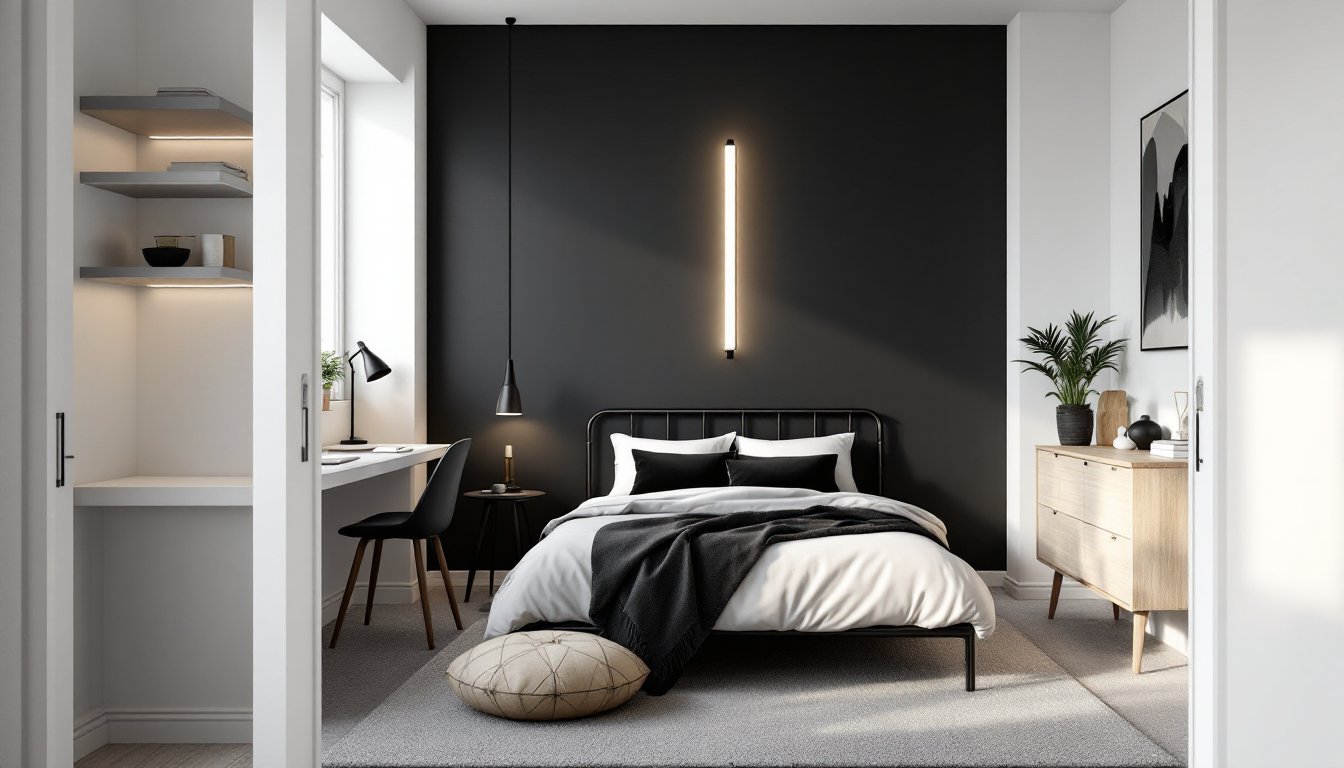
One effective approach is the “dark anchor” technique: paint the wall behind your bed (or another architectural focal point) in charcoal, deep gray, or true black, then keep the remaining three walls white or off-white. This instantly defines your sleeping zone and gives the room visual weight without swallowing natural light from windows. The contrast between the dark feature wall and surrounding white makes the room feel taller because your eye travels vertically.
Another strategy is horizontal color blocking along the wall height. A white upper portion and a matte black lower portion (typically at chair-rail height, around 36 inches) creates a formal, gallery-like feel that makes small rooms read as more intentional. You can also reverse it, black top, white bottom, which is less common and creates a modern, architectural statement.
Horizontal Stripes And Wall Patterns
Stripes demand careful execution in small spaces, but they work when sized appropriately. Thin stripes (2–4 inches wide) in black and white don’t overwhelm: thick stripes (6+ inches) can make a room feel either trendy or cramped depending on placement. Use stripes on a single accent wall, not all four walls. Horizontal stripes visually widen a room, while vertical stripes draw the eye upward, making ceilings feel higher.
Wallpaper with geometric or striped patterns lets you commit to pattern without painting. Young House Love covers budget paint tutorials that pair perfectly with patterned accent walls, use wallpaper where you want drama and solid paint elsewhere for balance. Geometric patterns (checkerboards, herringbone, damask) work in small spaces if they’re subtle rather than bold: a black-and-white geometric wallpaper in matte finish feels more sophisticated than glossy. Apply patterns below chair-rail height or on a single feature wall to avoid visual chaos.
Furniture Selection And Arrangement Tips
In a small bedroom, every furniture piece must earn its place. Black and white design simplifies your choices because you’re not hunting for items that “match” a color scheme, you’re selecting pieces based on function and scale. A low-profile bed frame, slim nightstands, and a compact dresser create an open floor plan that feels less cramped than oversized furniture crammed into the same footprint.
Color distribution across furniture matters too. If your walls are mostly white with a black accent wall, consider a dark bed frame (black metal, dark wood) or white bedding with black throw pillows. Avoid matching everything to the walls: let furniture breathe with its own color choice within the palette. A natural wood dresser or nightstand introduces warmth without breaking the black-and-white theme.
Placement is equally critical. Float your bed (don’t push it against the wall) if you have floor space, this creates layers and makes the room feel larger. Use tall, slim storage (vertical not horizontal) to maximize wall space without eating floor area. Wall-mounted shelves above a desk or dresser keep surfaces clear, which is essential in small spaces where visual clutter reads as physical clutter.
Choosing Multifunctional Pieces
Multifunctional furniture is non-negotiable in small bedrooms. A storage bed with built-in drawers eliminates the need for a separate dresser. An ottoman that doubles as storage and seating saves space while providing a landing spot. A desk that folds away or mounts to the wall gives you a workspace without consuming bedroom real estate when not in use.
When selecting these pieces, stick to your black-and-white palette but vary the finish. Matte black is more sophisticated and less reflective than glossy black, which can feel cheap. White furniture should be off-white or soft white rather than bright white, it’s easier on the eyes at night and photographs more warmly. Decorating Ideas for Mobile homes showcase smart multifunctional layouts in tight spaces: many principles transfer directly to small bedrooms. A daybed in white with black throw pillows functions as both sleeping and seating: add a trundle for guests without dedicating additional floor area.
Lighting Solutions That Brighten Compact Spaces
Lighting transforms a small black-and-white bedroom from potentially gloomy to intentional and inviting. A room with dark accent walls needs thoughtful illumination to avoid feeling cave-like. Layer your lighting: overhead (ceiling fixture or recessed lights), task (bedside lamps, desk lamp), and accent (wall sconces).
Recessed or flush-mount ceiling lights work better than hanging fixtures in small rooms because they don’t intrude into the limited overhead space. Bedside sconces or small table lamps in black metal or white ceramic keep nightstands clear and provide direct reading light. Avoid bulky lamp shades: look for streamlined designs that don’t visually clutter a nightstand.
Wall sconces flanking a mirror above a dresser provide both ambient and task lighting while keeping the dresser surface clean. LED strip lighting hidden behind floating shelves or along the baseboards adds subtle ambient light that makes the room feel more expansive. These strips work beautifully in monochromatic schemes because the light itself becomes the focal point, not the fixture color.
Color temperature matters: warm white (2700K) creates a cozy bedroom atmosphere, while cool white (4000K+) can feel clinical in small spaces. Stick with warm white for bedrooms unless you specifically want a modern, gallery-like feel. Dimmers give you flexibility, bright enough for cleaning and getting dressed, dim enough for relaxation. House Beautiful frequently showcases lighting strategies that work in tight footprints: black pendant lights and white fabric shades create focal points without consuming horizontal space.
Conclusion
Black and white bedroom design for small spaces isn’t about sacrifice, it’s about clarity. By controlling your color palette, using strategic color blocking, selecting multifunctional furniture, and layering your lighting thoughtfully, you turn square footage limitations into design strengths. The key is intentionality: every color choice, every piece of furniture, every light fixture should earn its place. Start with your accent wall, build your furniture around it, and light it properly. Tiny Home Living principles apply here too, constraint breeds creativity. Your small black-and-white bedroom won’t just function: it’ll feel like a thoughtfully designed retreat.