Boho style has become a go-to aesthetic for homeowners who want their living rooms to feel warm, personal, and unapologetically eclectic. Rather than following rigid design rules, boho wall decor celebrates color, texture, and individuality. The beauty of this approach is that you don’t need a massive budget or professional designer to pull it off. With the right combination of macramé, art, plants, and woven textures, anyone can transform a blank living room wall into a focal point that tells a story. This guide walks you through seven practical strategies to bring boho character to your walls without the fuss.
Table of Contents
ToggleKey Takeaways
- Boho wall decor celebrates eclectic, authentic design that rejects matching perfection, making it ideal for DIY projects at any skill level.
- Macramé wall hangings (36–48 inches) hung at eye level are an iconic boho statement piece that creates instant visual impact when layered with other art.
- Gallery walls with asymmetrical layouts, mixed frame styles, and varied media—prints, textiles, baskets, and shelves—define modern boho living room aesthetics.
- Woven baskets and fiber art in natural materials like rattan and jute add texture and warmth while providing practical storage without sacrificing style.
- Hanging plants with heavy-duty hooks (rated 10+ pounds) and warm, earthy accent colors repeated across pieces create cohesion in boho wall arrangements.
- Start with a neutral backdrop and layer one accent color across 2–3 pieces combined with natural textures to balance bold patterns without visual chaos.
Understanding Boho Style and Its Core Elements
Boho style draws inspiration from bohemian and hippie movements, embracing a “collected over time” aesthetic. Unlike minimalism’s clean lines, boho thrives on layers, handcrafted items, and cultural references mixed freely. The key elements that define boho walls are natural materials (wood, jute, macramé), warm and earthy color palettes, and an artfully imperfect arrangement.
What makes boho distinct is its rejection of matchy-matchy perfection. A boho wall might feature a framed textile next to a woven basket and a small floating shelf, items don’t need to coordinate perfectly, they just need to feel intentional. This approach actually works in your favor as a DIYer, since there’s built-in forgiveness for imprecision. You’re not aiming for a magazine-perfect gallery wall: you’re curating a vibe. The core principle is authenticity, pieces should reflect your travels, interests, or simply items you love.
Macramé Wall Hangings: The Signature Boho Statement
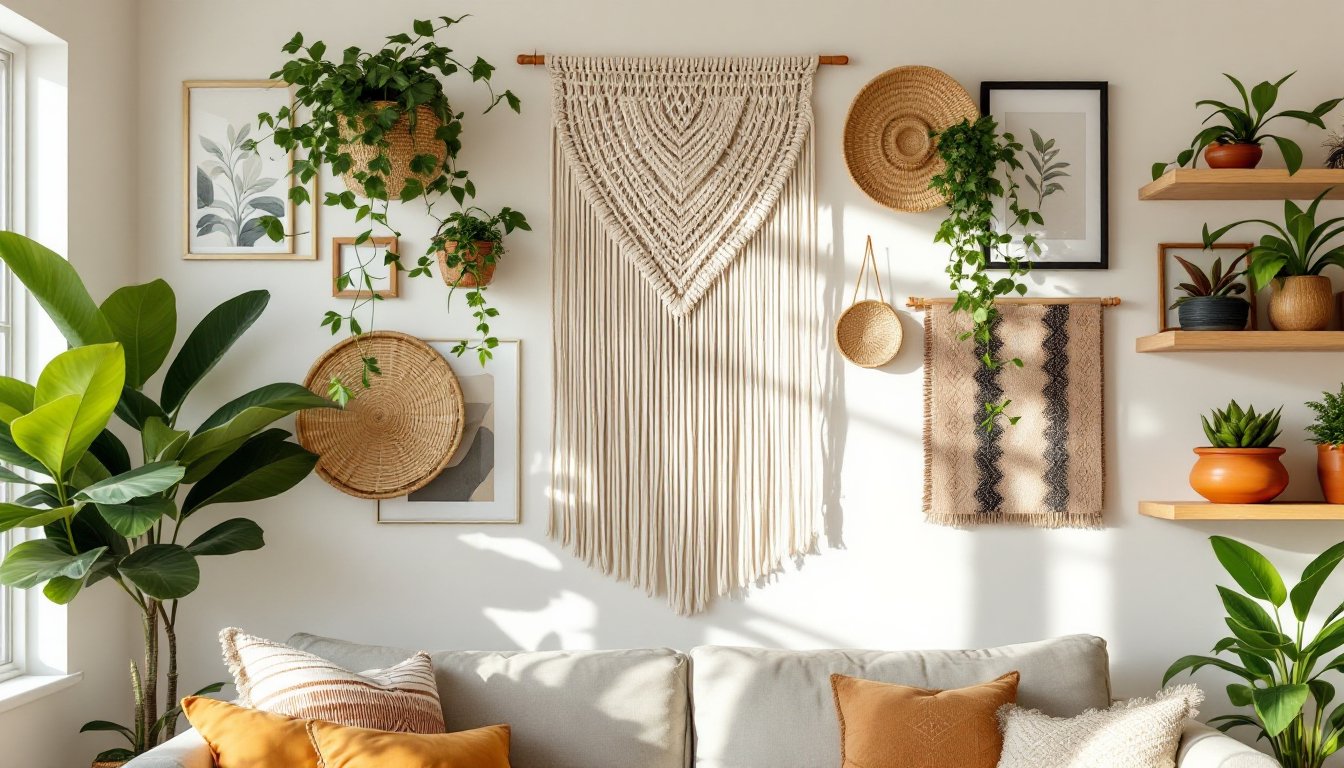
Macramé is arguably the most iconic boho wall element, and for good reason: it’s visually striking without being complicated. A macramé wall hanging (typically made from cotton or jute cord knotted in repeating patterns) serves as an instant focal point. The beauty is that you have two paths: buy pre-made hangings or learn basic macramé knots yourself.
If purchasing, look for hangings in the 36 to 48-inch range for medium living room walls. Hang it at eye level (roughly 60 inches from the floor to the center of the piece) or slightly off-center for that intentional boho feel. For installation, a simple L-bracket or sturdy wall hook rated for 5–10 pounds is sufficient for most store-bought pieces.
If you want to DIY, start with basic square knots and spiral knots, both are achievable with a cord, dowel, and patience. Budget 2–4 hours for a beginner’s hanging roughly 24 inches wide. Macramé doesn’t require mounting hardware beyond what you’d use for any wall hanging, but do verify your wall type (drywall, plaster, brick) to choose the right fasteners. Many boho enthusiasts layer a macramé piece with other wall art to create depth rather than letting it stand alone.
Eclectic Wall Art and Gallery Arrangements
Gallery walls are where boho style truly shines, and they’re one of the most forgiving projects for beginners. Unlike symmetrical gallery arrangements, a boho wall art setup embraces asymmetry and mixed media. You might combine framed prints, unframed textiles, small shelves, and 3D objects to create visual interest.
Start by gathering your pieces and laying them on the floor to arrange before hanging. A mix of frame styles and sizes works better than uniformity, think gold, wood, and black frames all together. Include a variety of art types: botanical prints, abstract pieces, vintage posters, and even unframed woven textiles secured with frame wire or museum putty. When spacing pieces, aim for roughly 2–3 inches between frames for a cohesive but lived-in look.
Hanging technique matters here. Use a level, painter’s tape, and pencils to mark where each nail goes before driving them. This prevents the common DIY mistake of crooked frames. For lightweight prints, finish nails in drywall work fine: for heavier pieces, use proper wall anchors or studs. Living Room Gallery Wall offers detailed layouts if you want inspiration on arrangement patterns that work with boho aesthetics.
Woven Baskets and Textured Wall Accents
Woven baskets aren’t just storage: they’re decorative elements that add warmth and texture to boho walls. Rattan, seagrass, and jute baskets in various sizes hung at different heights create visual rhythm. Unlike macramé, baskets are practical, you can store blankets, books, or magazines while maintaining the aesthetic.
To hang baskets securely, locate wall studs if possible and use heavy-duty picture hooks rated for 10–25 pounds depending on basket weight and contents. If studs aren’t available, toggle bolts or molly bolts in drywall provide reliable support. Arrange baskets in odd numbers (three or five) at staggered heights for that intentional boho feel rather than a grid.
Beyond baskets, consider woven wall tapestries or fiber art in natural tones. These lightweight textiles can be hung with a tension rod and fishing line or attached directly to the wall with fabric-safe adhesive strips. The key is combining textures, smooth against rough, dense against airy, to create depth. Living Room Wall Art: walks through more texture-focused approaches if you’re building a layered look.
Plants and Living Wall Features
Boho walls come alive when greenery joins the mix. Hanging planters with trailing plants like pothos, string of pearls, or pea tendrils create movement and soften hard walls. Unlike a full living wall (which requires irrigation and structural support), a few well-placed hanging plants are achievable for any homeowner.
When selecting planters, stick with natural materials: terracotta, ceramic, or woven hangers. Install plant hooks at 6-inch intervals (checking studs or using drywall anchors appropriate to planter weight with soil). Water weight is often underestimated, a 10-inch terra cotta planter with soil and a mature plant can weigh 15+ pounds. Use heavy-duty hooks, not flimsy adhesive strips. Indoor Plants for Living provides guidance on plant selection for different light conditions, which matters since many trending boho plants need bright, indirect light.
For the minimal-commitment approach, small floating shelves displaying potted succulents or air plants work just as well. Group odd numbers of plants together, three or five pots cluster more naturally than even numbers. Water regularly and inspect hooks monthly to ensure they’re holding under the weight.
Incorporating Color and Pattern Into Your Boho Walls
The color palette in boho rooms typically anchors in warm, earthy tones, terracotta, mustard, rust, cream, and soft browns. But, boho’s real power comes from mixing these base tones with accent colors and patterns without feeling chaotic.
When layering colors on walls, start with a neutral backdrop (a soft cream or warm white) and build depth with artwork and textiles. A terracotta or saffron-colored wall hanging introduces warmth, while patterned textiles with geometric or ikat designs add visual interest. The trick is choosing a color accent (say, deep teal or burnt orange) and repeating it across a few pieces so the eye reads coherence even amid eclecticism.
Pattern mixing is where many DIYers second-guess themselves, but boho embraces it. A botanical print can live next to a geometric textile, which sits near a woven basket with striped details. The unifying element is often color repetition and material consistency, if most pieces share similar textures (natural fibers, soft prints), the visual chaos resolves into harmony. If you’re unsure, pull inspiration from sites like House Beautiful’s boho-chic living rooms or Domino’s boho living room ideas to see how real spaces balance bold colors with soft textures. Start with one accent color, add two to three pattern types, and let the natural materials tie them together.
Conclusion
Boho wall decor is forgiving by design, which makes it ideal for DIY projects at any skill level. Whether you start with a single macramé hanging or commit to a full gallery wall, the boho approach rewards experimentation and personal taste over perfection. Layer thoughtfully, trust your instincts, and build your walls over time. The result won’t look like a showroom, it’ll look like home.