Teal has quietly become one of the most versatile colors for living room design, and it’s easy to see why. This sophisticated blue-green shade strikes a balance between calming and dynamic, working equally well in contemporary, coastal, or traditional spaces. Whether you’re planning a full living room overhaul or just want to refresh your existing layout, teal offers endless possibilities. The color works across different design styles without feeling trendy or dated, making it a smart investment for homeowners who want their spaces to feel fresh for years to come. This guide walks you through 15 design combinations and practical strategies to make teal work beautifully in your living room.
Table of Contents
ToggleKey Takeaways
- Teal living room ideas work across contemporary, coastal, and traditional styles because the color balances calmness with energy while remaining timeless and versatile.
- Pair teal with warm neutrals (cream, beige, taupe) or luxe metallics (gold and brass) to create either a forgiving, balanced aesthetic or a sophisticated, designer-inspired look.
- Decide whether teal will dominate through wall color or furniture—if walls are teal, keep sofas neutral; if a teal sofa is your focal point, use neutral walls for maximum flexibility.
- Layer accessories like throw pillows, indoor plants, and wall art in complementary colors to add depth and prevent the room from feeling flat or monotonous.
- Use warm-toned lighting (2700K bulbs) with layered fixtures to make teal feel cozy in the evening, and select textures like linen curtains and area rugs to ground the space acoustically.
- Start with a single teal element—an accent wall or statement sofa—and build gradually, allowing you to adjust the design over time without feeling locked into one direction.
Why Teal Works So Well in Living Rooms
Teal is a color that feels both restful and energizing, a rare combination that makes it ideal for the room where people spend the most time. Unlike deep blues that can feel cold or greens that sometimes lean too earthy, teal sits comfortably in the middle, offering warmth without becoming busy. It pairs naturally with nearly every other color, from neutrals to jewel tones, which means you have genuine flexibility when choosing accents and furniture.
The color also has a psychological benefit. Studies show that blue-green tones reduce stress and promote relaxation, which is exactly what you want in a living room where your family gathers to unwind. Teal doesn’t shout for attention: it creates a backdrop that feels intentional and curated. This is why it’s become such a popular choice on platforms like Domino, where interior designers showcase teal as a foundational color rather than a one-off accent.
From a practical standpoint, teal reads well on large wall surfaces. You can commit to it without the room feeling overwhelming. It also photographs beautifully, which matters if you ever plan to sell your home or simply want your space to look great on video calls. The richness of the color translates across different lighting conditions, performing well in both natural daylight and evening artificial light.
Color Pairing Combinations That Complement Teal
Knowing which colors to pair with teal is the difference between a cohesive living room and one that feels chaotic. The right combinations amplify teal’s strengths while preventing the room from feeling monotonous.
Teal With Warm Neutrals and Earth Tones
This pairing is one of the most forgiving and popular for DIY decorators. Warm neutrals, think cream, beige, tan, and soft grays, create breathing room around teal and keep the space from feeling heavy. When you paint walls in teal and introduce a cream or taupe sofa, the contrast feels balanced rather than stark.
Earth tones like terracotta, rust, and warm brown work beautifully as secondary accents. A burnt orange throw pillow or a rust-colored area rug grounds the space and adds warmth. This combination works particularly well if your living room gets limited natural light: the warm tones prevent the teal from feeling too cool. Many homeowners use this approach when they’re not ready to fully commit to bold color but want more personality than an all-neutral palette.
Teal With Gold and Brass Accents
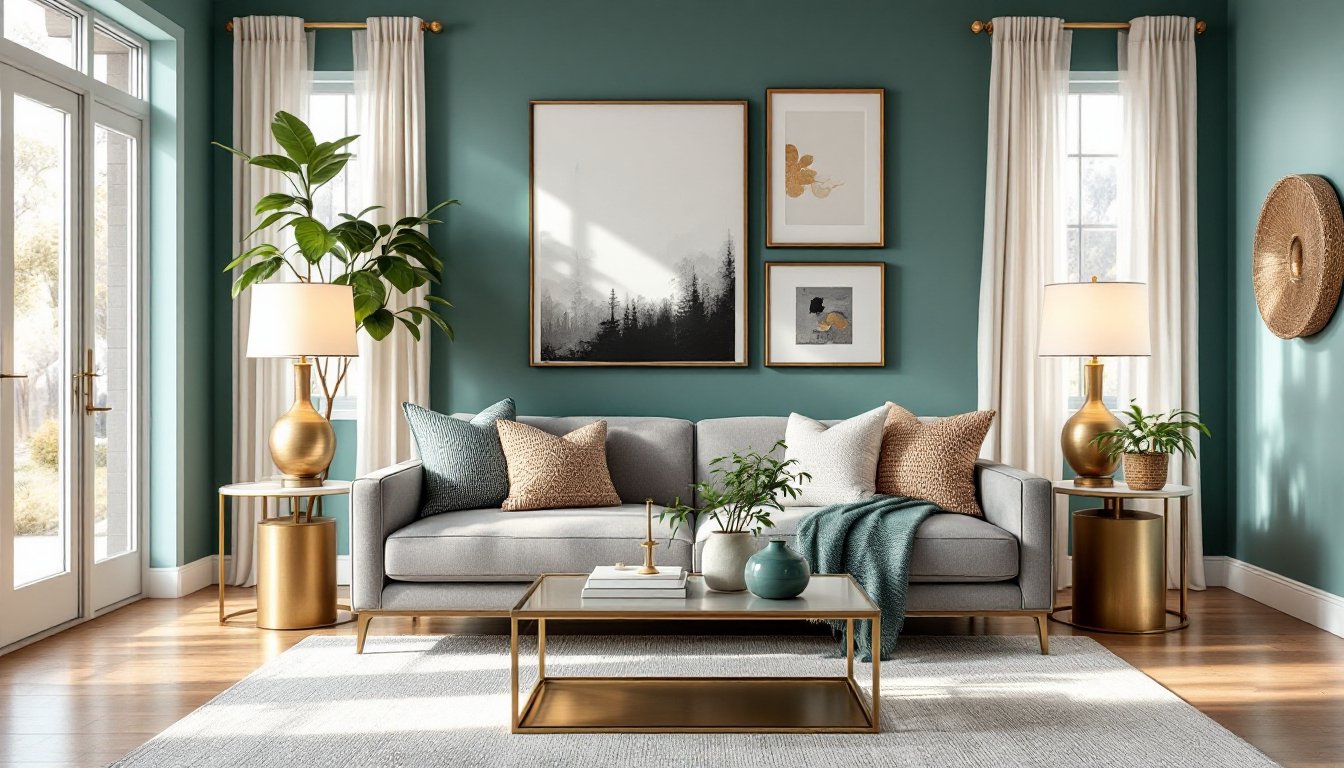
If you’re going for a more polished, intentional look, pairing teal with gold or brass hardware and fixtures elevates the whole room. Gold picture frames, brass table lamps, and metallic accents add luxury without the cost of high-end furniture. This combination leans toward a luxury living room aesthetic, where every element feels deliberate.
The warmth of metallics prevents teal from feeling sterile and adds visual richness. A teal accent wall with brass-framed wall art and gold-leafed accessories creates sophistication. This pairing is especially effective in rooms with good natural light, where the metallics can catch and reflect light throughout the day. Magnolia Home living rooms often use this approach, combining teal with warm metals for a curated, designer feel.
Furniture and Layout Tips for Teal Living Rooms
The key to a successful teal living room is layering your furniture and keeping your layout functional. Start by deciding whether teal will be your dominant color or an accent. If you’re painting walls teal, keep major furniture pieces, your sofa and chairs, in neutral tones like gray, beige, or soft white. This prevents the room from becoming too saturated and allows the teal walls to shine.
If you prefer teal furniture instead, go lighter on the walls. A teal sofa on neutral walls can be stunning and gives you flexibility to change accent colors without repainting. Consider the scale of your space when choosing upholstery colors: in smaller rooms, neutral furniture with teal accents is usually the safer route.
Layout matters too. Teal is bold enough that you don’t need excessive visual competition in the floor plan. Keep your seating arrangement simple and functional, a sofa facing an entertainment center or a conversational grouping works better than a scattered, cluttered layout. Leave adequate pathways through the room, especially if you have an open-concept living area.
When selecting furniture finishes, consider how they’ll interact with teal. Wood tones warm up the space beautifully: light woods feel contemporary while darker woods add formality. Metal frames (particularly brass or brushed nickel) add edge and prevent the room from feeling too soft. If you’re working with existing furniture, new upholstery or slipcovers are often more practical than replacing everything for the sake of color coordination.
Styling Accessories and Decor Elements
Accessories are where you can get creative and adjust the vibe of your teal living room without major investment. Throw pillows in complementary colors, creams, warm grays, blush, or deep jewel tones, add depth and comfort. Layer different textures like linen, velvet, and knit to create visual interest that keeps the room from feeling flat.
Indoor plants for living room spaces are an underrated teal companion. The natural green of foliage softens the cool tone of teal walls and brings life into the room. A tall fiddle leaf fig or pothos in the corner adds vertical interest, while smaller potted plants on side tables reinforce the color story. Plants also improve air quality, which is a practical bonus.
Wall decor is another opportunity to enhance your teal scheme. Living room wall art in complementary colors, think warm abstract pieces, prints with gold accents, or black-and-white photography, prevents walls from feeling bare. A living room gallery wall works especially well in teal rooms: the frame molding and varied artwork add complexity without clashing.
Lighting affects how teal reads in the evening. Warm bulbs (2700K color temperature) make teal feel cozy, while cool bulbs can make it feel clinical. Use a mix of layered lighting, overhead fixtures, floor lamps, and table lamps, to create flexibility. When you want energy, turn on more lights: when you want a relaxing evening, dimmed warm lighting is ideal.
Textiles like area rugs and curtains ground the room and soften acoustics. A neutral area rug with teal accents, or vice versa, ties the color palette together. Recent design trends show teal working beautifully with linen curtains in cream or soft white, which filter light beautifully and feel intentional without being fussy. Consider layering sheers for daytime privacy and heavier drapes for evening control.
Conclusion
A teal living room isn’t as intimidating as it might seem, especially when you approach it with clear color pairings and a functional layout strategy. Whether you choose model home living room inspiration or develop your own unique combination, the color works across styles and budgets. Start with one element, maybe a teal accent wall or a statement sofa, and build from there. The flexibility of teal means you can adjust and refine over time without feeling locked into a single direction. Your living room deserves to be a space where you actually want to spend time, and teal makes that easier to achieve.