Dead corners in living rooms are like unused square footage you’re paying rent or mortgage on, there’s no excuse to waste them. Whether you’ve got a 10-by-10 alcove or an awkward angled space, corners offer prime real estate for function and style. This guide walks through seven practical corner ideas that homeowners and renters can tackle without major structural work. From reading nooks to media stations, each option transforms forgotten space into a hardworking, intentional part of your home. You’ll find straightforward implementation tips, realistic material choices, and honest talk about what actually works.
Table of Contents
ToggleKey Takeaways
- Corner ideas for living room spaces eliminate wasted square footage by converting dead zones into functional, intentional areas through simple projects like reading nooks, shelving, or workspaces.
- A reading nook requires only a comfortable chair, side table, corner lamp, and area rug, costing $300 to $800 with no construction skills needed.
- Floating shelves maximize vertical space in corners by anchoring into wall studs with heavy-duty brackets, providing storage and display space at a cost of $100 to $400.
- Indoor plant corners improve air quality and aesthetics by grouping odd numbers of low-maintenance plants suited to your corner’s light conditions, ranging from $150 to $400 to establish.
- A corner media or gaming station requires wall-mounted TV installation, cable management, and a media console, budgeting $400 to $1,200 depending on equipment.
- Corner workspace or home office setups need an ergonomic desk (36–48 inches), proper lighting, and monitor positioning to prevent strain, costing $300 to $900.
Reading Nook with Comfortable Seating
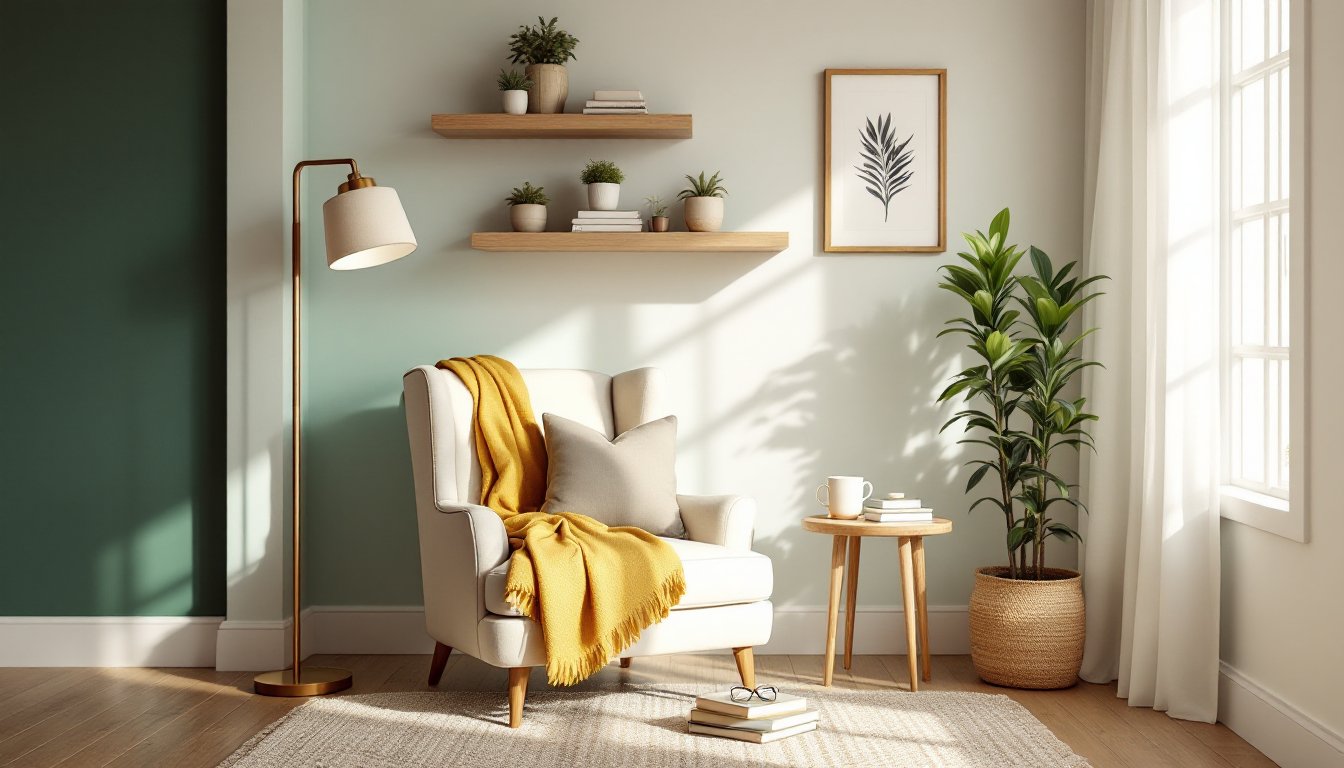
A corner reading nook is one of the easiest and most rewarding projects. Start with a comfortable chair or a bench seat with proper back support. You don’t need a designer piece, a sturdy upholstered armchair or even a wingback chair works perfectly. Position it 12 to 18 inches from the corner walls to prevent that trapped feeling.
Add a small side table (24 to 30 inches wide) for your coffee, books, or reading glasses. A tall corner lamp with a 60-watt equivalent LED bulb provides focused task lighting without harsh overhead glare. Drape a throw blanket over the chair back and add 2 to 3 throw pillows for comfort and visual interest.
For flooring, a 4-by-6 or 5-by-8 area rug defines the space and adds softness underfoot. Consider materials that suit your lifestyle: wool for durability, jute for warmth, or low-pile synthetics if you have pets or kids. The entire setup typically costs $300 to $800 depending on chair quality, and it requires zero construction skills.
Floating Shelves for Storage and Display
Floating shelves maximize vertical corner space without eating floor area. They’re ideal for storing books, displaying collectibles, or creating an organized command center. Install shelves 14 to 18 inches apart, standard spacing for books and small décor. Use a stud finder to locate wall studs (typically 16 inches on center) and anchor into them with heavy-duty L-brackets rated for at least 25 pounds per shelf.
Measure twice, mark with a pencil, and use a level to ensure shelves are perfectly horizontal, sloped shelves look cheap and books slide. Pre-drill holes to prevent wood splitting. For drywall-only corners without studs, use toggle bolts or heavy-duty anchors, though stud mounting is always stronger.
Choose shelves made from solid wood (pine, oak, or birch), engineered wood, or metal. Solid wood costs more but looks better long-term. Engineered options are budget-friendly and come pre-finished. Stack 3 to 5 shelves vertically to draw the eye upward and create an organized, gallery-like feel. Total material cost runs $100 to $400 depending on materials and shelf count, plus a few hours of work.
Indoor Plant Corner
Living corners bring instant warmth, air quality, and visual life to a room. Choose low-maintenance plants suited to your corner’s light conditions. North-facing corners get low indirect light: try snake plants, pothos, or ZZ plants. East or west corners with moderate light handle philodendrons, spider plants, or peace lilies. South-facing corners receive bright light: ferns, crotons, and rubber plants thrive there.
Indoor plants for living rooms don’t just sit in pots, layer them for visual depth. Use a combination of tall floor plants (5 to 6 feet), mid-sized planters on plant stands, and trailing plants on shelves. A tiered plant stand (24 to 36 inches wide) holds 3 to 5 plants in one compact footprint. Select planters with drainage holes and saucers to protect your floor.
Group odd numbers of plants, 3, 5, or 7, creates a more natural, intentional aesthetic than even rows. Water on a consistent schedule: most tropical houseplants prefer soil that’s moist but not soggy. Mist broad-leafed varieties weekly to remove dust and boost humidity. A corner plant installation costs $150 to $400 depending on plant size and pot quality, with minimal upkeep once established.
Media or Gaming Station
If your living room corners have decent wall space, a media or gaming setup makes sense. Mount a 43 to 55-inch TV on the wall using a tilting or full-motion TV mount rated for your TV’s weight. Check the VESA mounting pattern (usually 100×100, 200×200, or 400×400) and install the mount into wall studs. Position the TV 5 to 7 feet from typical seating, at eye level when seated.
Run cables through in-wall cable conduit for a clean look, or use adhesive-backed cable raceways if you can’t fish wires. Bundle cables with velcro straps behind a small console table or media stand. Keep the setup organized with a surge protector with enough outlets, 6 to 8 outlets minimum for TV, gaming console, soundbar, and streaming devices.
Add a small console or media cart (32 to 48 inches wide) underneath the TV for your cable box, gaming system, or soundbar. Choose something with open shelving so cords stay accessible. If gaming is the focus, a compact desk (36 to 48 inches) and a gaming chair fits the corner perfectly. Budget $400 to $1,200 depending on TV size, mount quality, and furnishings.
Home Office or Workspace
Remote work and side projects demand dedicated workspace, and a corner is perfect for a compact office. A small desk (36 to 48 inches wide) fits snugly into most corners without dominating the room. Position it to face into the room rather than toward the wall, it feels less claustrophobic and lets you see who’s entering.
Pair the desk with an ergonomic office chair with proper lumbar support. Adjust seat height so your elbows are at 90 degrees when resting on the desk. Poor posture during long work sessions leads to back and neck strain. Ensure the desk height is 28 to 30 inches, standard for offices, and that your monitor sits at eye level about 20 to 26 inches away.
Add task lighting with a desk lamp (LED, 40 to 60 watts equivalent) positioned to the side to avoid screen glare. A small floating shelf above the desk (12 to 18 inches deep) stores office supplies, books, or a small monitor. Personalize with a framed print, plant, or motivational item to make the space feel purposeful. A corner office setup costs $300 to $900 depending on desk and chair quality.
Accent Wall or Gallery Wall
Transform a corner with a bold accent wall or gallery wall that anchors the entire room. An accent wall in deep jewel tones (emerald, navy, burgundy) adds personality without overwhelming. Paint preparation is critical: fill nail holes and imperfections with spackling compound, sand smooth when dry, prime the wall with quality primer (one coat, 350 square feet per gallon), then apply two coats of semi-gloss or satin finish paint. Gloss finishes highlight imperfections: matte and satin are more forgiving.
Measure and mark wall edges with painter’s tape 2 inches from the corner to ensure crisp lines. Expect to spend $50 to $150 on paint and supplies for a small corner. The job takes 4 to 8 hours with drying time.
Alternatively, create a corner gallery wall using framed prints, photographs, and artwork. Arrange frames on the floor first to finalize spacing, then mark nail holes with a pencil. Hang at eye level (57 to 60 inches from floor to center) and use proper wall anchors for drywall. Mix frame sizes, mats, and artwork types, black and white photography, watercolors, and botanical prints all work together in a cohesive gallery. Modern design inspiration from sites like MyDomaine and Domino offer endless frame arrangement ideas. Gallery walls typically cost $200 to $600 depending on frame and art choices.
Conclusion
Corner spaces aren’t wasted, they’re opportunities waiting for intentional use. Whether you choose a quiet reading retreat, practical storage, or a functional workspace, the key is matching your corner project to how you actually live. Start with one corner, measure carefully, and don’t skip prep work. A handful of Saturday hours transforms dead space into a room that works harder and feels more complete. Pick the idea that resonates most with your lifestyle and get started.