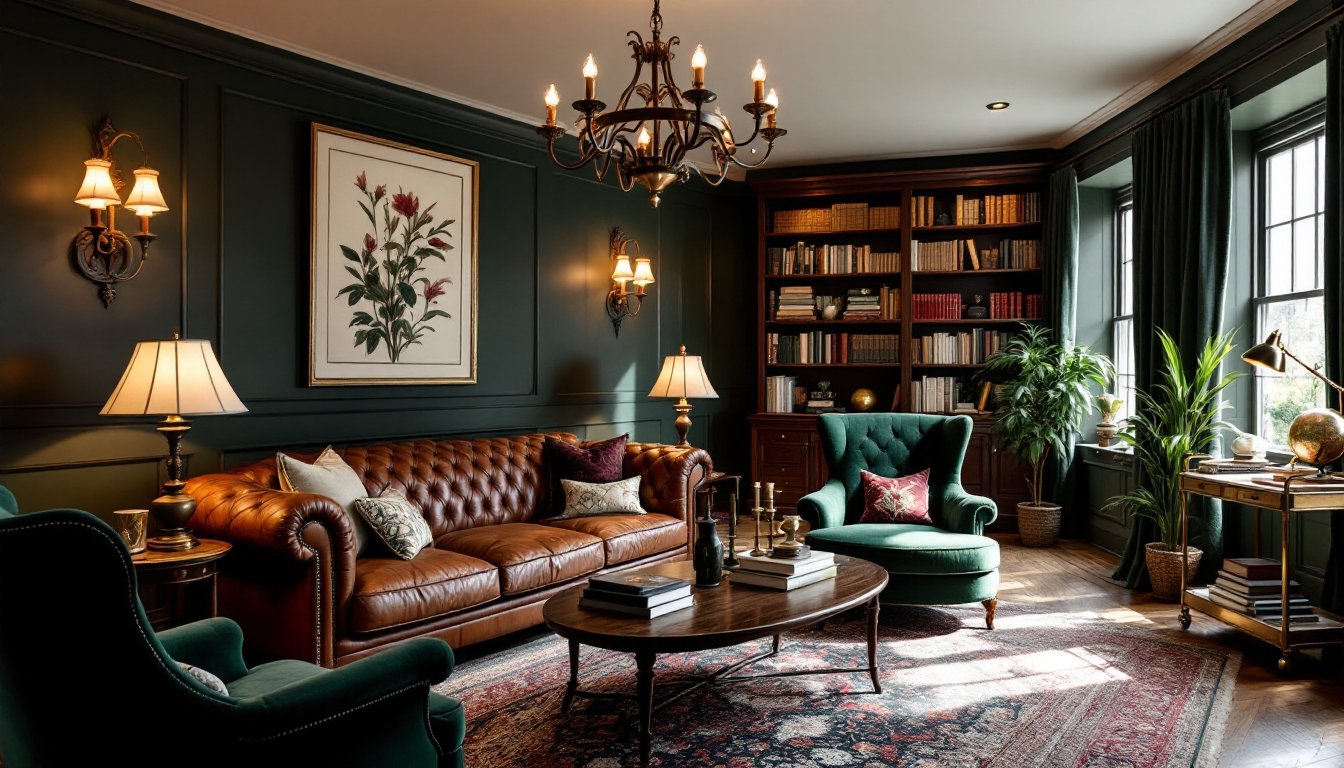
Dark academia isn’t just about leather-bound books and brooding literary characters, it’s a design movement that translates a moody, intellectual aesthetic into tangible home spaces. The dark academia living room has exploded in popularity as homeowners seek refuge from minimalism’s clean lines and embrace richly layered, book-filled environments instead. This style thrives on deep colors, vintage furnishings, and thoughtful lighting that evokes the atmosphere of an old library or university common room. Whether you’re drawn to Gothic undertones or simply want a space that feels scholarly and sophisticated, creating a dark academia living room is achievable without very costly or requiring extensive renovations. The appeal lies in layering: texture over color, vintage finds over new furniture, and ambient lighting over harsh overhead fixtures. This guide walks through the essential elements, from wall treatment and furniture selection to lighting and accessories, so you can build a retreat that feels both intellectually grounded and genuinely livable.
Table of Contents
ToggleKey Takeaways
- Dark academia living rooms combine deep jewel tones, vintage furniture, and layered lighting to create an intimate, scholarly atmosphere that ages gracefully and doesn’t require expensive renovations.
- Color is fundamental to the aesthetic—choose deep forest greens, burgundy, navy, or charcoal brown in matte finishes, and expect two to three paint coats for proper coverage on lighter walls.
- Layered lighting with dimmers, brass fixtures, and warm 2700K bulbs transforms a dark academia living room from cave-like to intentional and comfortable without sacrificing functionality.
- Furniture should tell a story through mixed woods, leather upholstery, and vintage pieces sourced from estate sales or thrift stores, arranged to encourage conversation rather than pushed against walls.
- Accessories like stacked books, botanical prints, brass globes, and coordinating textiles complete the scholarly feel while emphasizing composition and authenticity over expensive designer pieces.
- This design style works for living rooms because it provides both comfort and usability, creating forgiving, budget-conscious spaces that feel intellectually grounded and genuinely livable.
What Is Dark Academia Style and Why It Works for Living Rooms
Dark academia as a design philosophy draws from Gothic Revival, Victorian libraries, and the aesthetic of historic universities. It’s characterized by deep jewel tones, antique wood, leather accents, and an intentional, curated atmosphere, the opposite of generic or sterile. Unlike its literary counterpart, the dark academia living room doesn’t require floor-to-ceiling books or actual academic credentials: it’s about creating a feeling of timeless sophistication and intellectual comfort.
Why does it work so well for living rooms? Most living spaces demand comfort and usability. Dark academia provides both. The moody color palettes create intimate, conversation-friendly environments that encourage lingering. Vintage and mixed furniture styles accommodate real life, a worn leather armchair, mismatched side tables, stacked books, without looking cluttered. This style also ages gracefully: unlike trendy aesthetics, dark academia spaces gain character over time as you add patina, layer textures, and discover antique pieces.
The dark academia living room is also forgiving for budget-conscious DIYers. You don’t need designer pieces or boutique finishes. Thrift stores, estate sales, and online marketplaces overflow with the wooden desks, brass fixtures, and vintage textiles that anchor this look. The design philosophy emphasizes composition and atmosphere over expense, making it accessible for those who want a high-impact transformation without premium price tags.
Color Palettes and Wall Treatments That Define the Aesthetic
Deep, Rich Paint Colors and Wallpaper Options
The backbone of dark academia is its color palette. Forget pastels and soft grays. Think deep forest greens, charcoal blacks, burgundy, navy, and warm chocolate browns. The goal is to create a cocoon-like environment that feels intentional, not dark in a depressing way.
For paint, a high-quality interior latex in a deep matte or satin finish is essential, matte reduces glare and enhances the moody aesthetic, while satin offers easy washability. Brands like Sherwin-Williams, Benjamin Moore, and Farrow & Ball all offer rich, true-tone options. Sherwin-Williams’ “Urbane Bronze” and Benjamin Moore’s “Hale Navy” are popular choices that don’t veer into flat black. One coat rarely covers deeply, so expect two to three coats when painting dark colors, especially if your walls are lighter. Plan for roughly 300–350 square feet of coverage per gallon on standard drywall.
Wallpaper offers another dimension. Damask, floral toile, or botanical prints in dark colorways add instant Victorian library energy. Removable peel-and-stick options (from brands like Spoonflower or Tempaper) let renters experiment without commitment. For a permanent installation, ensure your walls are smooth and properly primed before applying traditional wallpaper, uneven surfaces telegrapraph through after application.
Consider an accent wall approach if you’re hesitant: paint three walls in a neutral tone and reserve one for a richer color or wallpaper. This prevents the space from feeling dungeon-like while maintaining the dark academia vibe. Bonus: an accent wall is budget-friendly and less overwhelming than a full commitment.
Furniture Selection and Layout for a Dark Academia Living Room
Statement Pieces and Vintage-Inspired Seating
Dark academia thrives on furniture that tells a story. Mixed-wood pieces, leather upholstery, and vintage finds create visual interest and depth. A worn leather Chesterfield sofa, oversized wingback chair, or brass-detailed ottoman become focal points that anchor the room.
Layout matters more than having a design-magazine setup. Arrange furniture to encourage conversation: face seating toward a fireplace (real or faux) or toward a low coffee table stacked with books and vintage candles. Create zones, a reading nook by a window, a desk area for writing or working, that reflect how you actually use the space. Avoid the temptation to push everything to the walls: floating furniture (especially a sofa angled slightly into the room) makes the space feel more intimate and less like a waiting room.
When sourcing pieces, prioritize solid wood over particle board. Walnut, mahogany, oak, and cherry wood furniture from the mid-20th century is durable, repairs beautifully, and gets better with age. Estate sales, local antique shops, and Facebook Marketplace are treasure troves for this style. Don’t overlook furniture in need of minor restoration, a wood refinish or reupholster is often cheaper than a new piece and guarantees authenticity.
For upholstery, leather is iconic but not mandatory. Deep-colored velvet, wool, or heavy linen in burgundy, forest green, or charcoal work equally well. Avoid cheap polyester blends that cheapen the look: invest in pieces that feel substantial. If budget is tight, thrift vintage seating and add coordinating throw pillows in complementary textures, paisley, damask, or solid wool.
Lighting Solutions That Enhance Ambiance Without Sacrificing Visibility
Dark academia living rooms live or die by lighting strategy. Poor lighting turns a moody retreat into a cave: good lighting makes it feel intentional and comfortable. The key is layered lighting: combine ambient, task, and accent lights so the room adapts to different activities.
Ambient lighting sets the mood. Install dimmer switches on overhead fixtures or, better yet, replace harsh 4-foot fluorescent or bright LED panels with softer options. Consider a brass chandelier, candle-style wall sconce, or fabric drum shade ceiling fixture in warm 2700K color temperature (warmer, more incandescent-like light). If you’re renting and can’t modify wiring, floor lamps with dimmer-compatible bulbs are your ally.
Task lighting handles reading and detail work. A goose-neck desk lamp, banker’s lamp with brass base, or adjustable library lamp ensures you can work without eyestrain. Position these over seating areas or desks so light falls directly on your work.
Accent lighting adds drama. Table lamps with vintage-looking bases, candlesticks (real or flameless for safety), and string lights or Edison bulbs in an ornate cage fixture create focal points. A warm-toned table lamp with a dark or cream linen shade on a side table beside a reading chair is both functional and atmospheric.
Avoid harsh, cool-toned LED downlights: they drain the aesthetic. Invest in warm, dimmable LEDs (look for 90+ CRI, 2700K, on packaging) if you’re switching fixtures. Recessed lighting can work if positioned to illuminate shelving or architectural details rather than flood the entire room with clinical brightness.
Accessories and Decor That Complete the Scholarly Atmosphere
Accessories are where dark academia comes alive. Books are non-negotiable, arrange them by color, spine-out, or subject. Don’t overthink it: real, lived-in libraries look organic, not styled. Stack hardcovers on coffee tables, fill shelving, and let overflow pile on the floor beside a chair.
Vintage finds add authenticity. Brass globes, leather-bound encyclopedias, framed botanical prints, and antique maps create a collector’s gallery without feeling precious. A living room gallery wall featuring prints of historic universities, vintage book covers, or academic illustrations reinforces the theme. Mix frame styles, wood, brass, ornate or minimal, for collected-over-time authenticity.
Textiles layer texture and warmth. A deep-colored or patterned rug grounds the seating area (Persian, Turkish, or botanical prints work beautifully). Throw blankets in wool, linen, or faux fur draped over chairs invite coziness. Velvet or damask throw pillows in coordinating tones add luxury without budget strain.
Incorporate functional decor: a rolling library cart holding books and a reading lamp, a wooden ladder for tall shelving access, or a secretary desk for writing surfaces. These aren’t just pretty, they serve the room’s purpose. Candlesticks, vintage typewriters, brass desk accessories, and leather desk blotters add scholarly details that feel earned rather than costume-y.
Living room wall art should reflect your intellectual interests, whether that’s literature, natural history, architecture, or travel. Avoid mass-produced “motivational” art: instead, source vintage prints online, frame book pages or vintage magazine covers, or commission custom pieces from local artists. Real dark academia spaces feel like they belong to someone, not like a showroom. Keep quality over quantity and intentionality over trends in mind, and you’ll strike the balance between sophisticated and livable.