Black and blue isn’t the first color combo that comes to mind for living rooms, most people jump to neutrals or warm tones. But when executed right, a black and blue living room creates sophistication, depth, and visual interest that feels intentional and polished. The trick is getting the balance right so your space feels cozy rather than cold, and contemporary rather than dated. Whether you’re starting from scratch or refreshing your existing room, these seven modern design approaches will show you how to make this bold palette work in your home.
Table of Contents
ToggleKey Takeaways
- Black and blue living room ideas work because blue promotes relaxation while black adds sophistication and prevents the space from feeling too soft or indecisive.
- Follow the 60-30-10 color ratio rule to avoid a cave-like or monotonous feel: choose your dominant color (blue walls or black accent), use the secondary color in smaller doses, and add 10% light accents for relief.
- Layer textiles and accessories strategically—neutral rugs, patterned pillows, warm lighting, and large-scale wall art—to prevent dark walls from feeling flat or gloomy.
- Invest in quality anchor furniture pieces like a charcoal sectional or navy accent chair, then unite a mismatched collection through the black and blue palette and natural wood or brushed metal finishes.
- Use intentional lighting with warm-toned bulbs (2700K-3000K) combined with accent fixtures and mirrors positioned near windows to maintain coziness and prevent the dark palette from feeling unwelcoming.
- A well-executed black and blue living room balances sophistication with comfort by committing to thoughtful proportions, curated accessories, and layers of visual interest rather than relying on solid colors alone.
Why Black And Blue Works For Living Rooms
Black and blue is a pairing rooted in visual contrast and emotional balance. Blue is calming and expansive, it lowers heart rate and promotes relaxation, making it ideal for a room where people gather to unwind. Black grounds the space, adds gravitas, and prevents the blue from feeling too soft or indecisive. Together, they create tension that’s visually compelling without being jarring.
This combo also skews modern and sophisticated. You’ll see it in high-end hotels, contemporary design showrooms, and luxury living room designs where the goal is to feel refined without being stuffy. The pairing works across multiple design styles too: minimalist, industrial, mid-century modern, and even traditional spaces when the shades are chosen carefully.
From a practical standpoint, black and blue are forgiving colors. They hide dust better than lighter palettes, they photograph well in natural light, and they provide a neutral backdrop for rotating artwork or seasonal accents. If you’re someone who likes to refresh your living room without a full redesign, this palette is your friend.
Color Balance: Finding The Right Ratio
The success of a black and blue living room hinges on proportion. Too much black feels cave-like and oppressive. Too much bright blue reads as juvenile or monotonous. The standard interior design rule is the 60-30-10 breakdown: 60% dominant color, 30% secondary, 10% accent.
Dominant Color Approaches
If blue is your 60%, keep the walls a soft or medium blue, think navy, slate, or dusty blue rather than electric cobalt. This becomes your visual anchor. Pair it with black in smaller doses: trim, an accent wall, a fireplace surround, or large furniture pieces. White or light gray becomes your 10% accent, breaking up the darker tones and preventing the room from feeling heavy.
If black is your dominant color, use it on an accent wall or as a bold painted ceiling (black ceilings are surprisingly dramatic when done intentionally). Let white walls or very light blue take up the majority of square footage. Navy or deeper blue furnishings and textiles provide the secondary 30%. This approach feels airier and works better in smaller rooms or homes with less natural light.
A balanced 50-50 split is trickier but possible. Imagine one wall rich blue, the opposite wall black, and the remaining two walls soft white or pale gray. Your furniture and accessories must then be carefully curated so nothing competes with the walls. This approach demands more confidence but delivers stunning results when done well.
Furniture And Layout Ideas
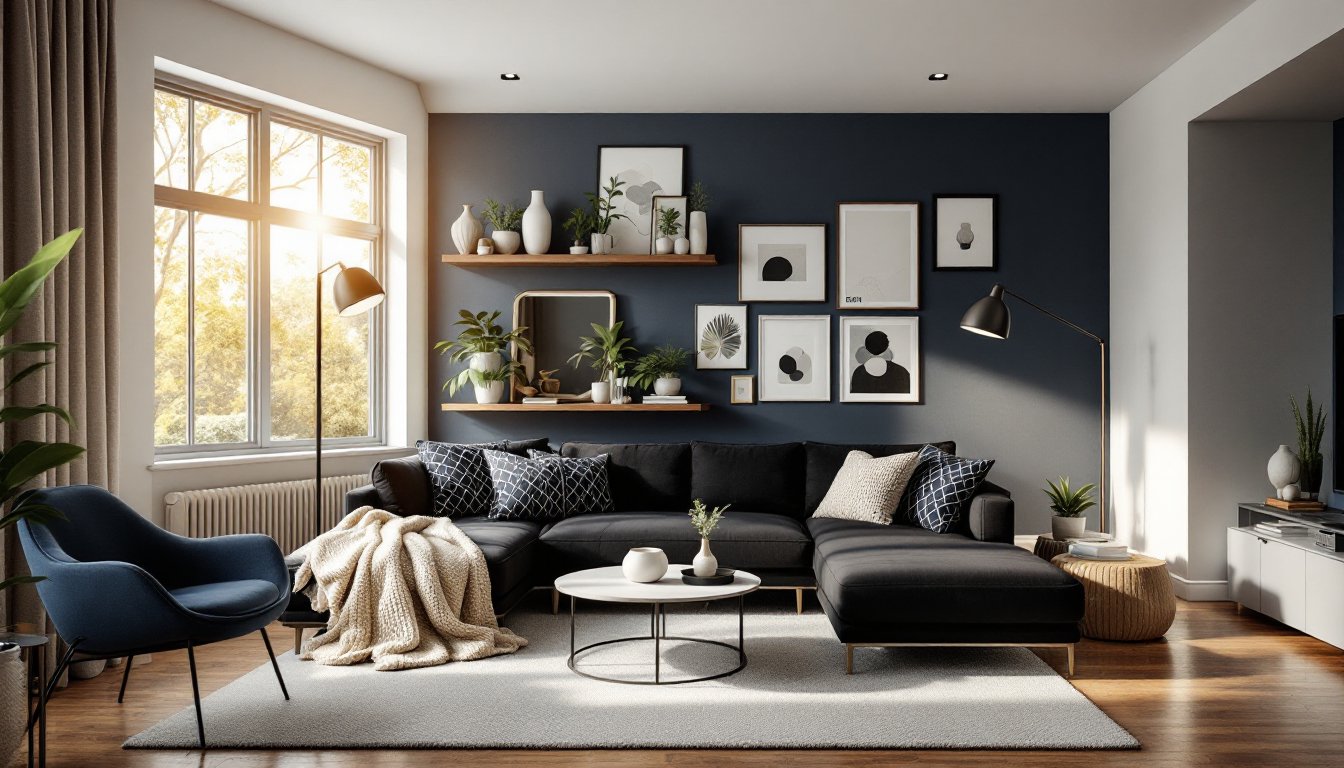
Furniture selection is where black and blue palettes become practical. A charcoal or black sectional is a natural anchor, it’s durable, hides stains, and reads as intentional rather than safe. Pair it with a navy blue accent chair, or vice versa. These two pieces carry the color story while leaving room for supporting furniture in white, light gray, or natural wood tones.
Textiles are your secret weapon for adding depth and preventing monotony. Layer in a chunky knit throw in cream or soft gray over your black sofa. Add pillows that mix solid navy with patterns, geometric prints, subtle stripes, or even a navy and white checkered design all work. Rugs should anchor the seating area: a large neutral rug (light gray, cream, or even a very pale blue) grounds the space and prevents it from feeling too dark.
Statement Pieces And Accent Walls
Consider making one wall a statement. A deep blue accent wall with matte or satin finish feels modern and sophisticated. If blue walls feel too bold, a black accent wall behind a bookshelf or TV creates drama without overwhelming the room. Wallpaper is another option, a geometric black and blue pattern or a subtle texture in one of these colors adds visual interest without solid color monotony.
Furniture finish matters too. Black or navy upholstery looks best paired with either natural wood (oak, walnut, or cedar tones) or brushed metal hardware. Chrome or polished brass fixtures feel slightly too formal for most living rooms: matte black or bronze finishes feel more contemporary and grounded. If you’re working with existing furniture, even a mismatched collection becomes cohesive when united by the black and blue palette.
Lighting And Accessories For Depth
Lighting is non-negotiable in black and blue rooms. Dark colors absorb light, so you need intentional illumination to avoid a gloomy space. A mix of light sources works best: overhead fixtures for general illumination, task lighting near seating (floor lamps or table lamps), and accent lighting to highlight architectural features or artwork.
Choose light fixtures with visual interest. A sculptural floor lamp in brushed black metal, a modern pendant above a side table, or a statement chandelier (even in polished brass or frosted glass) adds dimension that solid dark walls can flatten. Warm-toned bulbs (2700K-3000K) create coziness: cooler bulbs (4000K+) feel more clinical, so lean warm unless you’re going for a minimal, gallery-like aesthetic.
Accessories and wall art transform black and blue from a color combo into a complete design story. This is where living room wall art becomes essential, large-scale abstract pieces, black and white photography, or even colorful modern art pop against these darker walls. A living room gallery wall mixing framed prints, photography, and 3D objects creates personality and breaks visual monotony.
Add texture through materials: a woven wall hanging, ceramic vessels in white or natural tones, books on floating shelves, and plants. Indoor plants for living rooms introduce organic green tones that complement blue beautifully. A pothos, snake plant, or even a fiddle leaf fig in a white ceramic pot adds life and softness to a dark palette. Mirrors are also crucial, position one opposite a window to reflect natural light and make the space feel larger. Black-framed mirrors reinforce your color story while functioning practically.
Conclusion
Black and blue living rooms deliver sophistication and modernity when balanced thoughtfully. Start with your 60-30-10 ratio, commit to one dominant color, and let the secondary and accent colors provide relief. Invest in quality furniture in solid colors, then layer textures and artwork to prevent the space from feeling flat. Remember that proper lighting and curated accessories are what separate a dramatic living room from a dark, unwelcoming one. This palette rewards intention, there’s little room for accident, but the payoff is a space that feels intentional, collected, and distinctly yours.